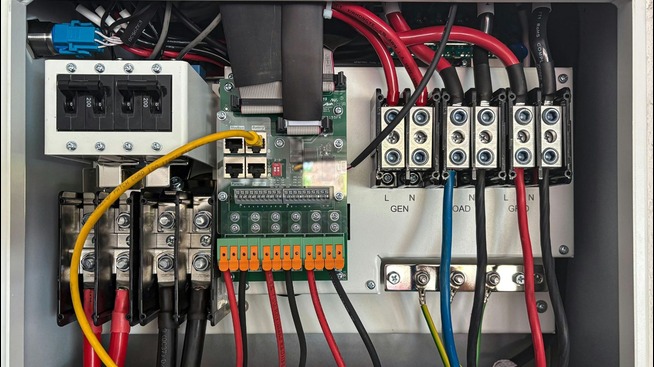


Introduction

An industrial power system that operates beyond 1000V AC is typically considered as a high-voltage one. This kind of industrial facility requires utmost compliance to safety standards and regulations to ensure that people are free from electric shock and injury, and to safeguard valuable firm assets.
For electrical safety in a high-voltage industrial property, you can install a Molded Case Circuit Breaker (MCCB). This device shuts down power when it detects an overload or a short circuit avoid any harm to workers and machineries.
In this article, we discuss the benefits of MCCBs to industrial safety and their common applications across industrial settings.
The Role of MCCBs in Industrial Safety
An MCCB is a modern fuse system that protects the circuit from excessive current that may cause a short circuit or overload. This device comes with thermal and magnetic components that trip the breaker when an electric fault is detected.
MCCB Overload Protection
When the electric current of the circuit exceeds a predetermined safe threshold, the MCCB’s thermal component, which consists of two metallic components, will start to heat and bend away. This “bending” of the metallic components will push the breaker’s trip bar and unlatch the contacts, resulting in current flow interruption. This means zero electric current in the circuit and the prevention of electric shock and equipment damage.
MCCB Short Circuit Protection
MCCB operates on the principle of electromagnetism to promptly respond to short circuits. Every MCCB has a solenoid coil that produces a small electromagnetic field when current passes through the breaker. When there is a short circuit, excess current flows through the coil, and a stronger electromagnetic field is generated that opens MCCB’s contacts. This “large” magnetic field forces the breaker to trip.
The aforementioned protective capabilities of MCCBs are vital to ensure safety and operational continuity in high-voltage circuits.
Say that an industrial facility’s electric system generates a surge of electric current due to faulty equipment. If left unchecked, this surge can overheat wires that can cause fires or damage facility equipment. It can also damage equipment that is vital to protection, which results in production delay or downtime.
But if an MCCB steps in and trips to disconnect the circuit’s power supply, all potential electrical mishaps will be avoided. The MCCB cuts off power at a precise moment, as it can trip in as fast as a few milliseconds.
Compliance and Standards for MCCBs
Various international standards are established for vouching for the reliability and performance of MCCBs during electrical faults.
Why comply with these standards? The most pressing reason is that these standards guarantee the MCCB’s capability to address overloads or short circuits. A non-compliant breaker is most likely ineffective against faults.
Second, non-compliance may result in fines imposed by a regulatory body. An industrial MCCB proven to bypass these standards can be a serious violation for the company. Moreover, most insurance companies require that all electrical installations, including MCCBs, comply with safety codes (like NEC, IEC, or local standards).
Some key international standards for MCCBs include:
- IEC 60947-2: Specifies the requirements for circuit-breakers used in industrial and commercial installations up to 1000V AC.
- UL 489: Specifies requirements for the design, construction, and performance of MCCBs to ensure safety in residential, commercial, and industrial applications.
- CSA C22.2 No. 5: A Canadian standard that is harmonized with UL 489 for ensuring that MCCBs meet Canadian electrical safety and performance requirements.
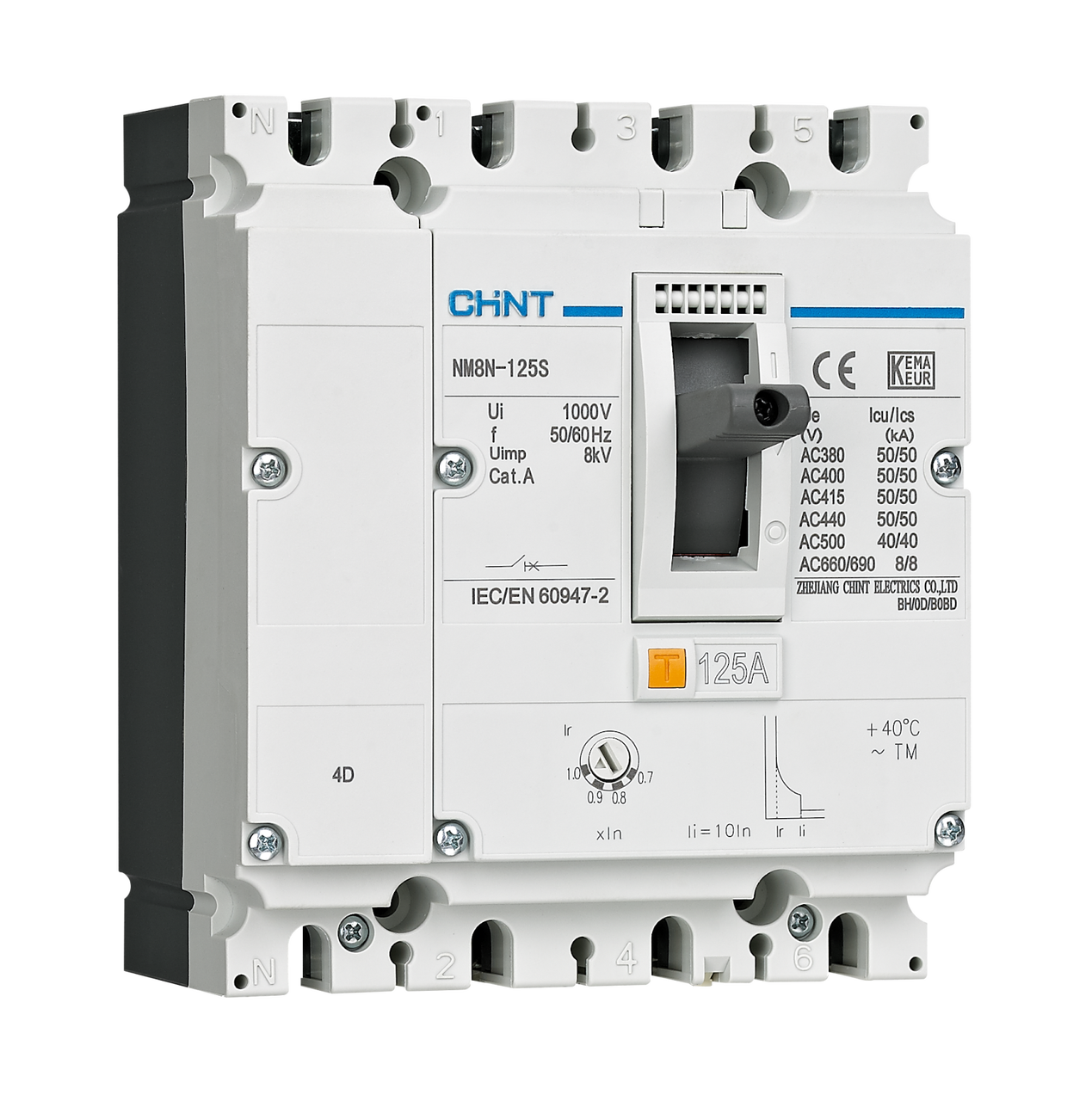
To ensure that your MCCB is standard-compliant, acquire one from a reputable manufacturer such as CHINT. For instance, CHINT’s NM8N Moulded Case Circuit Breaker provides superior circuit and equipment protection against overload, short circuit and under voltage for infrequent start of motor. This device is designed for circuits of AC50/60Hz, with rated voltage AC690V and below, DC system rated voltage DC1000V and below, and rated current of 16A and 1600A. And for ultimate versatility, the NM8N can be installed vertically or horizontally, as well as enter the line from the bottom.
MCCBs in High-Voltage Applications
With its higher voltage threshold and reliable electrical safety performance, MCCBs are extensively used across industrial settings that involve high-voltage operations.
In manufacturing plants like steel mills, large electric motors power heavy machinery such as rolling mills. When there is a jam, which forces the motor to work harder, the motor might burnout and cause an electric fault. MCCBs can easily detect these conditions to prevent an electric hazard.
In solar power installations, the inverter may experience an overload when there is a sudden uptick in photovoltaic generation (such as when after cloudy days clear). To prevent damaging the inverter and its connected components, the MCCB will trip to cut excess current flow. This mechanism also protects the solar installation’s battery storage, which is highly vulnerable in an event of earth leakage or overload.
Meanwhile, some data centers use MCCBs with adjustable, long-time/short-time, and instantaneous trip settings to protect their power supply system. When one rack of the facility experiences a short circuit event due to a power supply module failure, the fault current spikes fast that increases electrical fault risks. The MCCB can detect this surge and isolate only the affected branch before the fault propagates upstream to the UPS or the main switchboard.
MCCBs are also commonly used in motor feeders as overload and short-circuit protection. As motors draw 6 to 8 times their rated current at startup (inrush current) and run continuously near their full-load current, the MCCB is ready to cut the current flow to prevent any electric hazard.
MCCB Trip Units and Settings
So, how do MCCBs detect abnormal circuit current flows? There are two ways MCCBs detect a fault: thermal-magnetic trip units and electronic trip units.
The thermal-magnetic trip unit comes with a bimetal strip for overload protection and a magnetic coil for instantaneous short-circuit trip. Meanwhile, an electric trip unit is a microprocessor-operated module that continuously measures current flow and commands the breaker to trip when preset thresholds are exceeded.
Between the two, it is the electronic trip units that offer a wide range of adjustable trip options. This type enables engineers to set long-time, short-time, instantaneous, and ground-fault trip levels to match the actual load profile.
For instance, engineers can activate a long-time delay feature that lets the breaker tolerate temporary overloads that occur during normal startup, without disconnecting power unnecessarily. This selective adjustment ensures that only genuine electrical faults trigger a trip, while normal operational currents do not cause unwanted interruptions.
CHINT’s NM8N-HV is an example of an MCCB solution that offers adjustable trip options for higher voltage applications. This product can also break circuits with zero arcing, which is essential in various photovoltaic (PV) power generation systems. With its maximum working voltage of around AC 1150V, the NM8N-HV can reliably safeguard electrical systems such as output loading of string inverters and loading capacity of the AC combiner box in a PV system.
Reliability and Long-Term Operational Benefits
Industrial electrical safety is typically the thing on top of people’s minds when MCCBs are mentioned. But this device is also known for its long-term operational continuity benefits.
MCCBs can detect faults early, so whole sections of a facility will not go down at once, and the operations will keep running. They use sensors to spot abnormal current flow, such as short circuits or overloads, almost instantly. When a problem appears on one circuit, only that specific section shuts off, while the rest of the facility keeps getting power as usual. This targeted response keeps critical equipment and processes running, even if a fault happens somewhere in the system.
Furthermore, you may install and mount MCCBs in any direction (e.g., vertical, horizontal, or bottom entry, which makes future upgrades or expansions much simpler. Clear tripping indicators and straightforward reset levers are also available that can help maintenance staff find and fix issues without wasting time.
Invest in a Top-Quality MCCB For Guaranteed Industrial Electrical Safety
MCCBs feature a high breaking capacity, which makes them integral in high voltage industrial applications. This device can safely halt or cut even extremely large current flow imbalances safely, which protects equipment and avoids fires or explosions.
For robust, reliable, and standard-compliant MCCBs, visit CHINT and select from our innovative MCCB products. We are a globally-renowned manufacturer of innovative energy solutions for clean, safe, efficient, and cutting-edge energy management products. All of our products are developed to meet stringent international standards to ensure the safety of your valued staff, high-value assets, and circuit systems.



-banner.jpg)