

Table of Contents |
The CJ19 Capacitor Contactor is a critical component in electrical systems. It’s designed for capacitor switching. They help optimize power factor and improve electrical system efficiency. This contactor type is typically used in industrial and commercial settings. It ensures smooth power distribution and energy conservation.
Proper installation of the CJ19 helps ensure optimal performance and safety. It’s recommended to carefully follow each installation step and adhere to all manufacturer guidelines.
Preparation
Installing a CJ19 Capacitor Contactor requires careful planning. Follow these preparation steps to ensure a safe, successful contactor installation:
1. Safety Measures
Disconnect the power supply before starting the installation of this contactor type. Switch the main circuit breaker off to eliminate any potential electrical current.
Wear insulated gloves and protective goggles. These protective equipment items can shield you from potential electrical arcs, short circuits, and accidental contact with live components.
2. Tool Preparation
Gathering the right tools beforehand streamlines the capacitor contactor installation process. The required tools include:
- Wire crimping pliers
- Wire stripping pliers
- Appropriately sized wires and terminals
- Screwdrivers (manual hexagon and flat-head)
- Multimeter
- Insulated gloves
- Safety goggles
3. Initial Checks
Before installing this specific contactor type, conduct thorough preliminary assessments to guarantee compatibility and proper placement.
Verify that the CJ19 Capacitor Contactor’s specifications align perfectly with your system’s electrical requirements, voltage ratings, and current load.
Additionally, choose an installation site that complies with the required operating conditions. For example, the ambient temperature should be -5℃ ~+40℃ and the average during 24 hours should not exceed +35℃. Also, consider the altitude, pollution degree, etc.
Installation Steps
This section provides detailed guidance for the physical CJ19 contactor type installation. Make sure to follow all these steps in order:
1. Physical Installation
Align the bottom of the capacitor contactor with the DIN rail’s edge. Apply firm, even pressure or use mounting screws to secure the device.
If removal is required, use a flat-head screwdriver to release the DIN rail stopper. Carefully detach the device by tilting it forward at a slight angle to prevent damage.
2. Wire Preparation
Choose wire sizes that match the contactor’s rated current. For the CJ19-95 model, use copper wires with cross-sectional areas between 1-25 mm². Always refer to the specific product specifications.
Then, strip the wire insulation carefully. Here are the key recommendations:
- Primary Circuits: Remove 15mm of insulation.
- Secondary Circuits: Strip 9-11mm of insulation.
Make sure the stripping is clean and precise to facilitate secure connections.
3. Terminal Connections
Connect terminals systematically. Follow these guidelines for primary circuit connections:
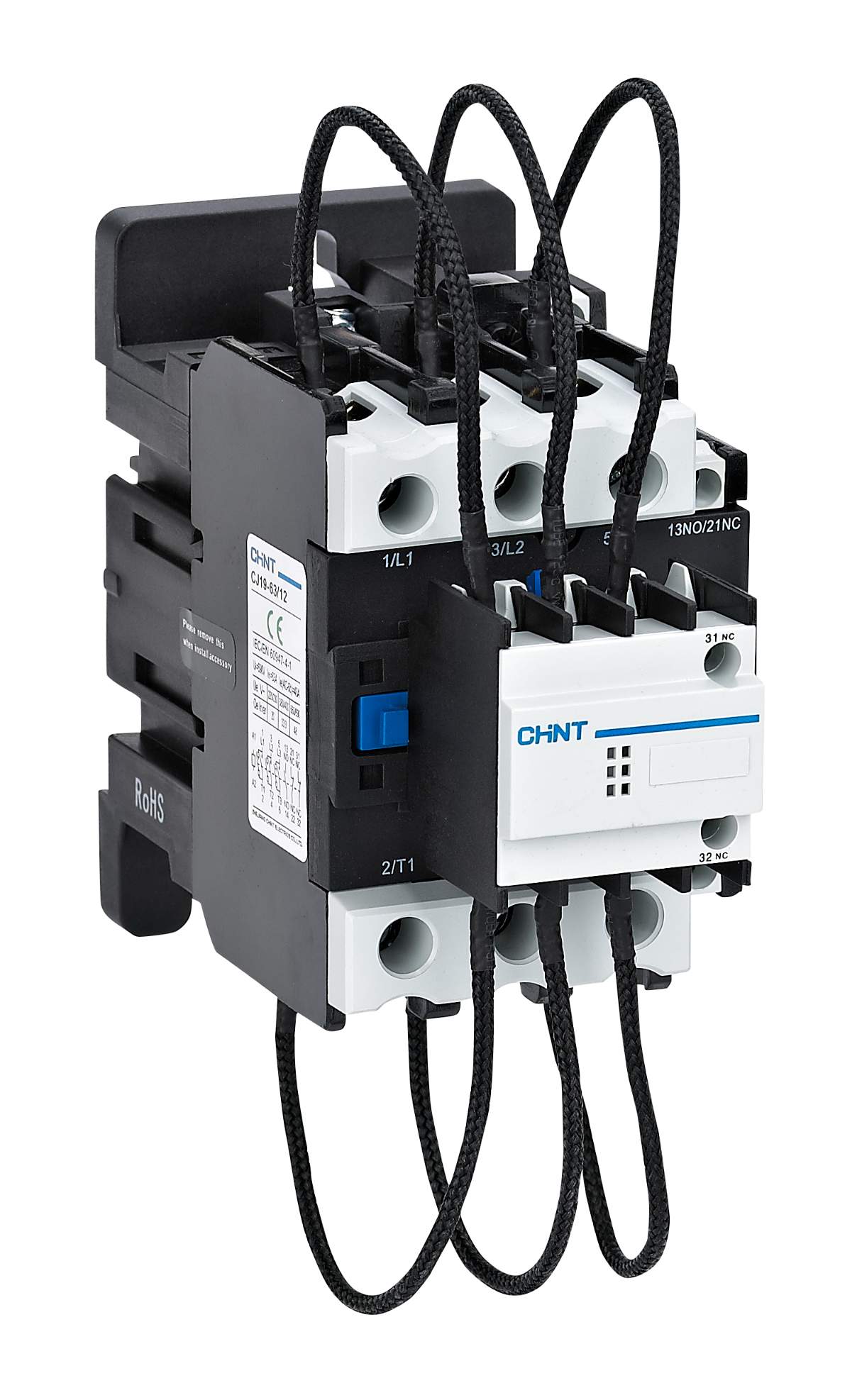
- 1/L1, 3/L2, 5/L3: Connect to upstream circuit breaker.
- 2/T1, 4/T2, 6/T3: Connect to capacitor contactor bank.
Follow the specified configuration (normally open or normally closed). Connect the A1 and A2 terminals to the capacitor controller.
Wiring and Testing
This critical phase ensures the contactor’s proper integration and operational reliability.
1. Connection Guidelines
Tighten terminals to precise torque values:
- Primary Circuit: 10 N.m.
- Control Circuit: 0.8 N.m.
Use a calibrated torque screwdriver for the best accuracy during contactor installation.
Double-check all contactor wiring connections. Make sure to secure terminal attachments. There shouldn’t be any exposed wire segments. Ensure proper alignment of connections as well.
2. Preliminary Testing
Power the coil with rated control voltage. The goal is to verify smooth mechanical operation and that there are no unusual sounds or resistance. The electrical response of contactor wiring should be consistent, too.
Don’t forget to use a multimeter to confirm primary circuit continuity. Check for any unexpected resistance and validate electrical pathway integrity.
Fault Diagnosis and Troubleshooting
During electrical installations, various issues can potentially arise with the CJ19 Capacitor Contactor. Common issues and their respective troubleshooting steps include:
Symptom |
Potential Causes |
Troubleshooting Steps |
No Action or Unreliable Action |
Control power supply voltage mismatch with coil voltage |
Use a control power supply matching the exact coil voltage |
Insufficient power supply capacity or disconnected or incorrect wiring |
Comprehensively check and correct all wiring connections |
|
Burned-out coil or jammed mechanical moving parts |
Replace the coil and remove foreign matter blocking movement. If unresolved, replace the entire product |
|
Product Noise |
Foreign objects on yoke and armature pole surfaces |
Carefully clean core pole surfaces |
Control power supply voltage too low |
Ensure control voltage matches specified coil voltage |
|
No Release or Slow Release |
Contact meltdown |
Replace the entire product |
Oil or dust on core pole surface |
Thoroughly clean core pole surface |
Conclusion
Installing a CJ19 Capacitor Contactor requires precision and respect for electrical safety protocols. Following proper guidelines and operational best practices is crucial. At CHINT, we welcome consultation if you encounter uncertainties during installation. For additional assistance, feel free to get in touch with local support contacts.

.png)