


Table of Contents |
With the current technology, humans have come up with ways to improve the mechanism of various systems used for multiple things. The automation industry is constantly improving, and humans have achieved incredible feats ever since. It all started with PLC or Programmable Logic Controller.
This tool helps control a specific production process by keeping the air flowing maintaining the volume of water tanks and other components in a production process that needs to be regulated. However, PLC cannot simply control everything, and it cannot work simultaneously to control other devices and procedures as well.
Then came the birth of DCS or Distributed Control System. As the name suggests, this tool distributes its power to control different processes in production, which makes it more flexible. At the same time, the tool can be coordinated to other devices as well, which makes it more reliable to use in different devices in a plant.
Now we know this, it is time to understand what it is precisely and why it is vital for the production process.
What is Distributed Control System?
In simplest terms, a DCS or a Distributed Control System is a tool that manages all the components that need to be controlled in a plant. Think of it as the one extensive remote control that can turn on or off any device within a particular area. This device is powerful, especially in places where automation is highly utilized.
A few people usually control DCS. However, DCS is highly different from a plant’s main control unit. What it mainly does is manage a particular group of machines. These machines are categorized and grouped, then controlled by a DCS.
Then the information taken by the DCS is transferred to the central control unit of a plant. The leading data is being processed and then studied in real-time.
To get a clearer picture of it, imagine you are sending a message to a group of people, and you asked this group of people to transfer the message to the primary receiver you want. The group of people is like DCS, and the main receiver is like the central unit of the whole plant.
DCS makes controlling easier, especially for units that need more extensive attention in a plant.
Where is Distributed Control System (DCS) Used?
The main purpose of DCS is to be used in extensive production processes in a plant. So, let’s say for manufacturing, distribution, or chemical manufacturing. With DCS, manufacturers can control different production areas and transfer information in real-time to the main computer unit of a plant.
At the same time, DCS also transfers instructions to the different components of a plant, which makes the automation process more accessible and more efficient. This information is distributed to individual components, creating a particular plant component function.
Everything must be organized accurately to get the best results in using DCS. At the same time, to guarantee the safety of everyone in the plant, every DCS also acts as a regulator to every device used in a plant.
What is the Difference Between DCS and PLC?
Speed of Response
PLC is faster than a DCS because it takes 30mins for a DCS to respond. However, despite its slow response, it can control various plant components.
IO Capacity
DCS is viable if you want to control multiple IOs at a time because PLC can only control a few.
Logic Development
Every DCS is equipped with built-in control, configured based on the need, while PLC does not have a built-in control.
Redundancy
DCS is cheaper to maintain because it only uses the default system while PLCs are not. In using PLCs, you are compelled to buy more additional hardware, making them more expensive.
Application
If you want to use a single control system to a single device, then PLC is the one for it. However, if you need a more reliable component for multiple devices, then DCS is the one you should choose.
Cost
PLC is more expensive than a DCS, but that does not make PLC less of a value.
What is the Difference Between DCS and SCADA?
Focus
Despite their similarity, a DCS and SCADA have many differences. One of which is the focus of the devices. The number one control of SCADA is gathering data from one area to another. In comparison, the DCS is more of authority to various systems or components of a plant. In simple terms, DCS is the remote control, and the SCADA is the one that gathers information.
Areas of Implementation
It also differs on the application. The scope of reach of SCADA is broader, and it can transfer information from one plant to another. But DCS can only control the devices within the plan where it is placed.
Ability to Endure Communication Loss
SCADA can handle any interruption to communication while DCS can’t. This is important, especially if the area is prone to electricity interruption.
Communication Protocols
SCADA can support various protocols, but DSC can’t. However, this does not mean that DCS is useless for communication. It’s just that SCADA stands out more in communication.
Processing Times
SCADA is faster than DCS because it mainly connects to the main network system. However, DCS is effective for communication.
CHINT Distributed Control System
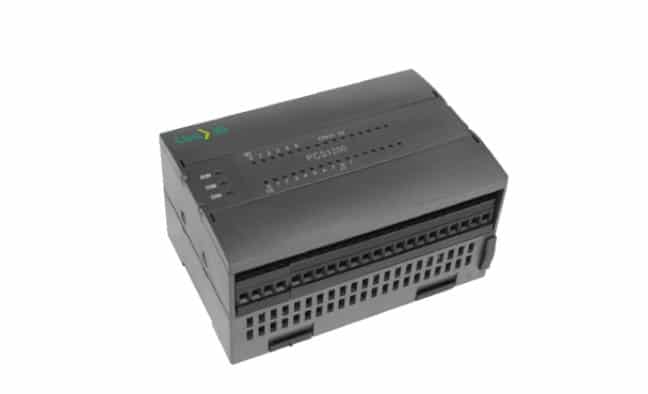
CHINT offers various devices that would help the needs of a plant. With this, CHINT excels in offering top-notched services by offering distributed different control systems according to your needs.
One of which is the PCS1800 Distributed Control System. At the same time, they also have a PCS1200 Programmable Logic Controller. Both devices can help in data dissemination, and they can help every control processing needs of a plant.
Both products are powerful, and they can be helpful to manage the processes of various devices. At the same time, both are advanced in the market and can constantly adapt to the new technologies that we have now.
For more information, visit the CHINT website and look for the best Distributed Control System for you.