

Table of Contents |
There is no question that even the experts tend to get confused sometimes when it comes to the terms used in the electrical industry. The terminologies lightning and surge arrester are confusing aspects.
And, if you aren’t familiar with these terms, it is important to know the difference. While most people believe that a lightning arrester and surge arrester are the same, they are different. The former one is installed outdoors whereas the latter one is installed indoors.
However, both of them keep your electrical appliances safe from accidents. In this article, you get to know about the difference between lightning and surge arresters.
What Is a Surge Arrester?
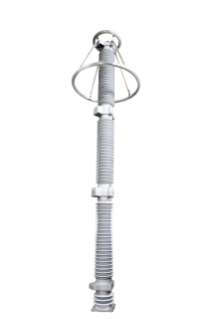
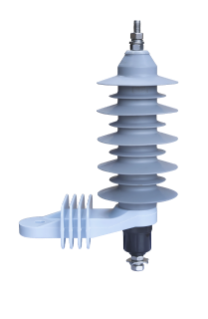
A surge arrester is a kind of protective device used to limit voltage on equipment by bypassing or discharging surge current. It helps to prevent continued flow, directs them to the ground, and is capable of repeating this process.
Surge arresters don’t stop lightning or absorb them. It diverts the lightning and limits the voltage. As such, it protects the electric equipment. Surge arresters have different types of applications from protecting a home to utility substations.
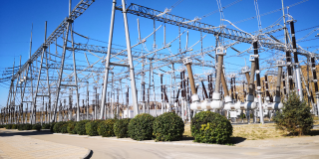
In general, they are installed inside pad-mounted transformers, on the circuit breakers inside homes, on substations, and pole-mounted riser poles. Standards for these arresters are defined by IEC standard 60099-4 and IEEE standard C62.11.
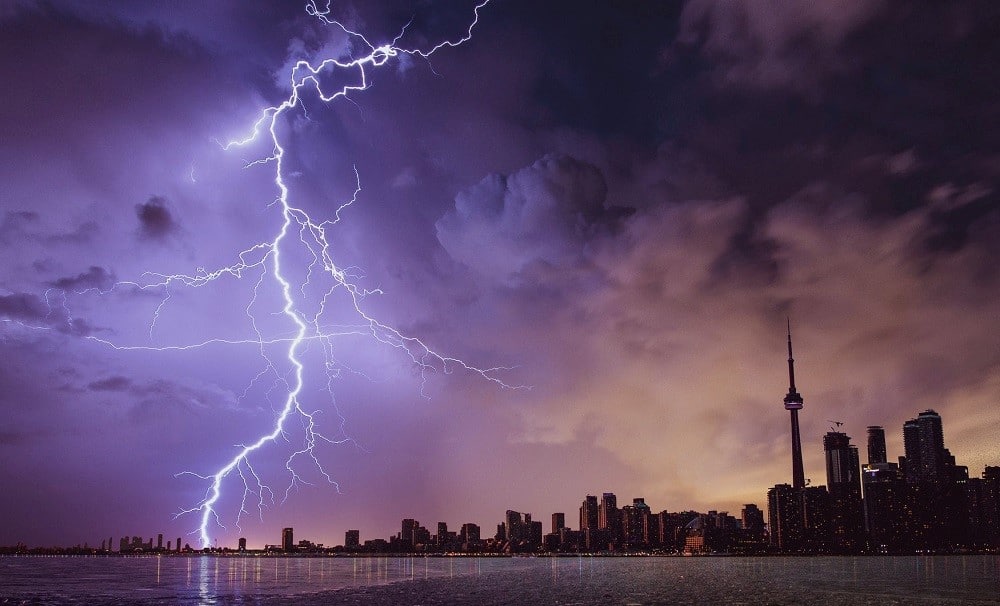
The main power line witnesses several voltage surges and lightning is one of them. Lightning is an unpredictable and random event. It is believed that about 100 lightning strikes on the surface of Earth every second.
Other kinds of voltage surges include temporary overvoltage and switching surges. Temporary overvoltage results from ground faults one a single phase while the voltage tends to rise on the unfaulted phases and remain until it gets cleared.
Switching surges are overvoltage that is produced by alterations in operating conditions for the main voltage surge. Switching surges is the energy trapped and subsequent release of the same.

What Is a Lightning Arrester?
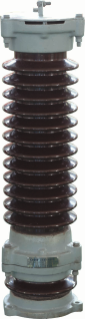
Voltage surges are generated in different ways because of lightning. The circuit that gets protected from lightning strokes with the help of a certain device is called lightning arresters.
Lightning surges are the surges that have high transient voltage, surge currents due to lightning, sparks, arcs of isolation, etc. These devices defends the power systems by diverting the high voltage surges directly to the ground.
Moreover, these systems get protected by using earthing or ground wire from direct lightning strikes. These devices are mounted on transmission poles, towers, and buildings to provide a secured pathway to the discharging current.
The working principle of lightning arresters is pretty straightforward. After the voltage surge travels through the conductor, it reaches the arrestor where it was mounted. It interrupts the insulation of the arrestor for a moment so that the voltage surge can move toward the ground.
After the voltage comes down to the fixed value, the insulation gets restored among the conductor and ground. Furthermore, the current flowing towards the ground will stop instantly.
This kind of arrestor is mostly found near a device that needed to be protected. And, they are installed among the phase and ground within an alternating current system and ground and pole within a direct current system.
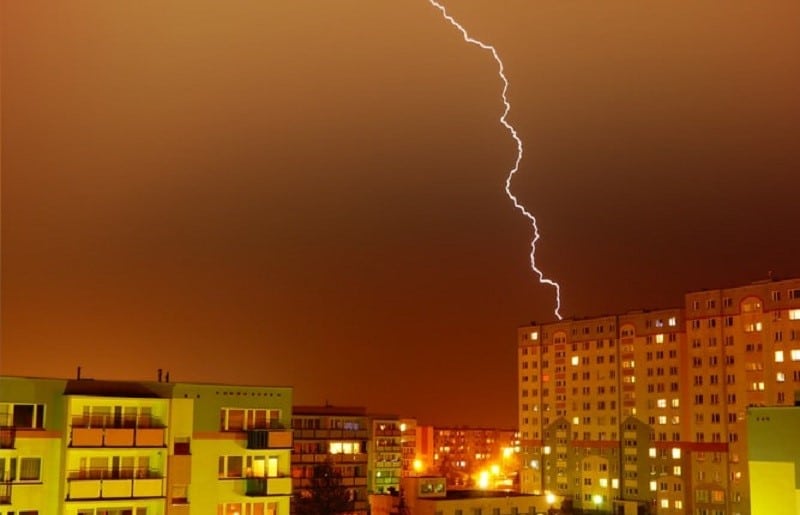
Surge Arresters vs Lightning Arresters:
The differences between surge and lightning arrestors are as follows.
Surge arrestors
- The main function of these arrestors is to protect several kinds of electrical appliances from inside the home.
- The surge arrestors have to be installed within the main panel board.
- The surge arrestors defend the whole system from surges, switching lightning, electrical faults, and transient voltage.
- These kinds of arrestors interrupt the surges and divert the surplus energy toward the ground through the ground wire.
- The different types of surge arrestors include low-voltage, distribution, neutral protection, fiber tube, network, signal, direct current, stations, etc.
- This arrestor can be used only as a surge arrestor.
Lightning arrestors
- The primary function of these arrestors is to defend the electrical appliances from outside and so they are installed outside the home or business.
- The installation of lightning arrestors can be done only to the outside panel board.
- The lightning arrestors redirect the flow of electricity to the ground through the arrestor devices directly.
- The lightning arrestors are used for lightning strikes. Moreover, they can be used for linked surges as well.
- The different types of lightning arrestors are metal oxide, electrolyte, multi gap, horn, sphere, and rod.
- They can be used as surge arrestors as well.
Should You Use Surge Arresters or Lightning Arresters?
Whether you should use surge arrestors or lightning arrestors remains a million-dollar question. To begin with, either tool protects your home. However, it depends on what you need to get the protection for.
In short, the decision to choose one among them varies by the kind of protection you need. The purpose of both of them is to protect your home. Because both these tools tend to protect your home, either of them should work effectively.
In most situations, homeowners may choose either one as protection. However, one should consider the certain aspect of what they are trying to protect. Rest assured, any one of the tools can provide the right kind of protection needed for the electrical appliances at home.
When in doubt, homeowners can call a certified and experienced electrician who can provide them with the right solution. Because every home is different, the needs vary as well. The experts have specific recommendations tailored to the needs of every individual.
Moreover, there are lots of devices that a person might know about and it is equally important not to follow other’s advice. Only a professional from the electrical industry has the right knowledge needed.
Conclusion
In short, both lightning and surge arresters play an important role when it comes to protecting your electrical devices. They keep your devices undamaged. However, the main difference lies in how they function.
Moreover, anyone must have them in their home or business. So, talk to an expert and find out which option will keep your electrical devices safe.
If you have any questions or need further assistance, don't hesitate to reach out to us.