

Table of Contents |
Your home’s solar panels produce direct current (DC), but your appliances run on alternating current (AC). Solar power inverters are electrical components that convert DC power from your solar panels into usable AC power for your home.
A newer type of solar power inverter is the hybrid inverter. It functions differently than a standard solar power inverter. It has the advantage of sending energy back to the grid. It has other benefits as well, but there are also some disadvantages.
Here, you’ll get an idea of the differences between standard and hybrid solar inverters, along with the advantages and disadvantages of each type.
How Does a Hybrid Solar Inverter Work
A standard solar power inverter converts DC power from the solar panels into AC power to run your home appliances. But can AC power be taken from the grid and converted into DC power so you can store it in batteries? The answer is yes, with the help of a hybrid solar inverter.
Unlike standard solar power inverters, a hybrid power inverter takes excess power from the grid and stores it as DC power for your solar battery system. You now have additional capacity to draw from in case of inclement weather conditions or a power outage.
The other difference is the hybrid power inverter’s unique ability to manage and regulate power throughout the system. It allows for optimum electrical output and ensures your system works efficiently under any weather conditions.
Hybrid Solar Inverter: Types and Functions
While all hybrid solar inverters are similar in the way they function, there are some differences between them. Here’s a look at the three most common types.
Inverter/Charger Hybrid Power Inverter
This option is the most common type of hybrid solar inverter, where the system can charge the batteries using power from the grid. Once a battery charge limit is reached — or electricity from the grid is disrupted — the batteries will kick in and provide energy.
It also switches to AC power in battery mode during peak usage, eliminating power disruptions and increasing efficiency. Use this type of inverter for small spaces such as:
- RV’s
- Trailers
- Boats
- Small offices
Integrated Hybrid Power Inverter
Some hybrid inverters employ maximum power point trackers (MPPTs) in their design. Although uncommon, these components save space by optimizing panel output and battery power. However, most older models do not tie into the grid, so you won’t be able to sell surplus energy back to it.
Grid-tied Hybrid Power Inverter
Unlike regular inverters, grid-tied hybrid inverters connect your home to the power grid so you can sell back any surplus energy, saving you money on your electric bills. Besides that, you have a backup source of electricity during peak loads, at night when your solar panels no longer produce power, or during inclement weather.
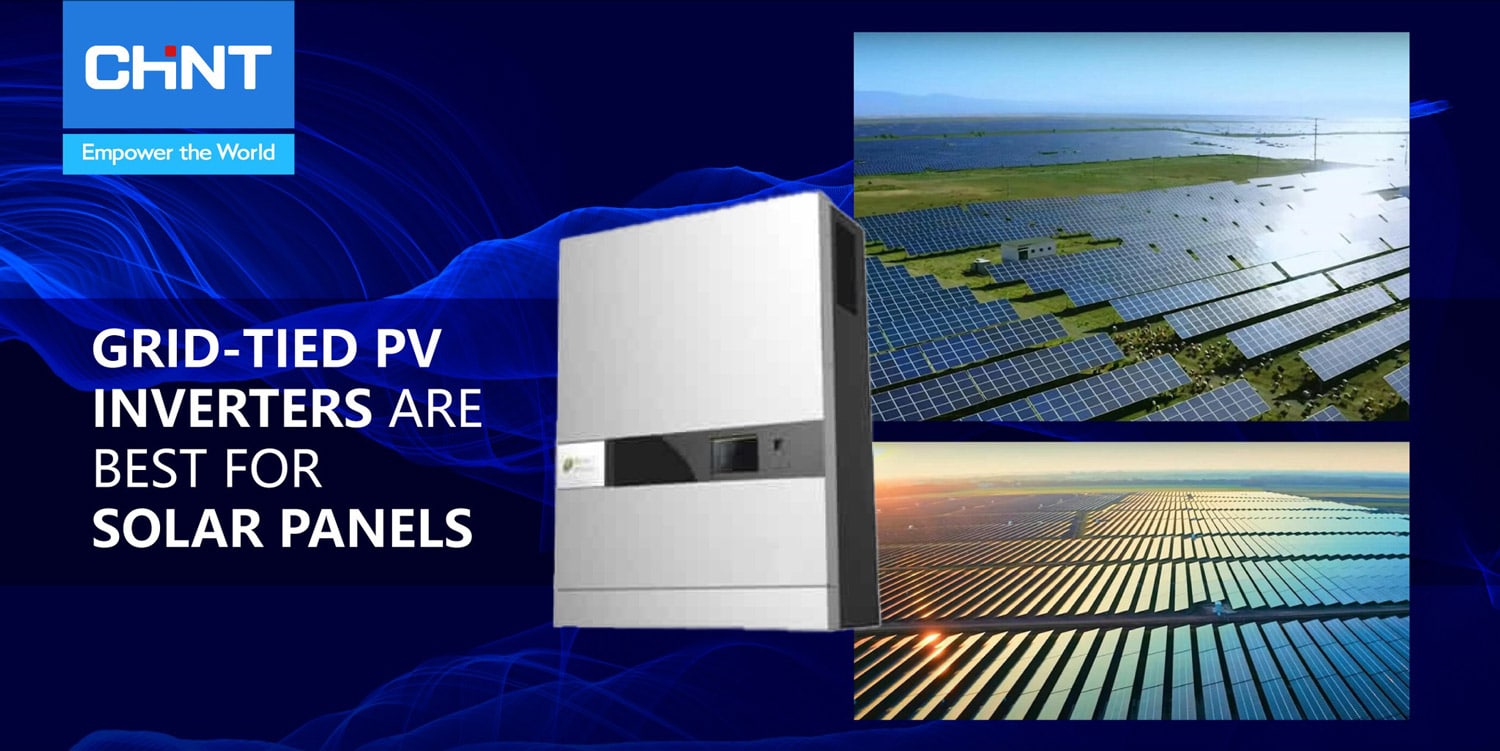
Chint Global’s grid-tied PV inverter products have been researched and tested to provide consistent power and efficiency for your home or business. They offer improved internal design features and compact sizes suitable for almost any application.
How Do Hybrid Inverters Compare To Other Inverters?
When shopping for a solar power inverter, comparing them side by side makes sense. Each type comes with unique benefits and drawbacks compared to hybrid inverters.
Hybrid Inverters vs. String Inverters
Hybrid and string inverters differ in terms of function and flexibility. String inverters work well for small-scale, shade-free installations. However, it suffers from decreased output when a single panel is shaded. This type of inverter also lacks the ability to provide backup power during grid disruptions.
Hybrid inverters, on the other hand, integrate solar and battery inverters. It offers a comprehensive solution for power generation, storage, and grid interactivity. They manage power flow dynamically and offer ‘pass-through power’. This allows continuous energy use during grid failures.
Hybrid Inverters vs. Micro Inverters
Hybrid and micro inverters differ primarily in their placement and conversion processes. Micro inverters, mounted on each solar panel, convert DC to AC energy at the source. This enables them to track individual panel performance, which assists in maintenance.
While micro inverters can send excess power back to the grid, you will need another component called a combiner to tie all the panels together. Also, since each panel requires a separate inverter, the initial cost of your system will increase.
In contrast, hybrid inverters, installed centrally in the house, convert electrical currents from all panels collectively. This type of inverter offers an overall system performance view. Their operational variations cater to different monitoring needs. This provides flexible solutions for businesses and construction companies managing solar installations.
Hybrid Inverters vs. Off-grid Inverters
Hybrid and off-grid inverters differ in grid integration and energy management. Hybrid inverters allow energy export to the grid. It can also serve as backup power during blackouts.
Conversely, off-grid inverters draw power solely from batteries. It converts DC to AC. They are designed to operate independently, storing excess power in battery banks, and do not feed power back into the grid.
Pros and Cons of a Hybrid Inverter
There are advantages and drawbacks to installing a hybrid power inverter on your system. We list them for you here.
Hybrid Inverter Pros
- Off-grid capabilities
- Flexible storage integration
- Minimal maintenance
- Remote monitoring
Hybrid Inverter Cons
- Not for upgrading existing systems
- Higher initial cost
- Future options may be limited
Should You Invest In A Hybrid Solar Inverter?
Purchasing a hybrid solar inverter now can save you money later. For example, if you plan on adding battery storage to your system in the future, it will be much better to have a hybrid power inverter installed now. Adding one later means paying more for rewiring a new inverter into an existing system.
Also, investing in a hybrid power inverter now will allow you to sell back unused energy to the power grid. This way, you can save money on energy bills and recoup the extra cost quickly.
Conclusion
Chint Global’s grid-tied inverters offer improved performance and reliability for a wide range of solar power applications. Discover how the SCE series can improve the efficiency and reliability of your system.
FAQ about Hybrid Inverter
Can a hybrid inverter work off-grid?
Is a hybrid inverter more expensive than a standard inverter?
Can I upgrade my existing solar system with a hybrid inverter?