

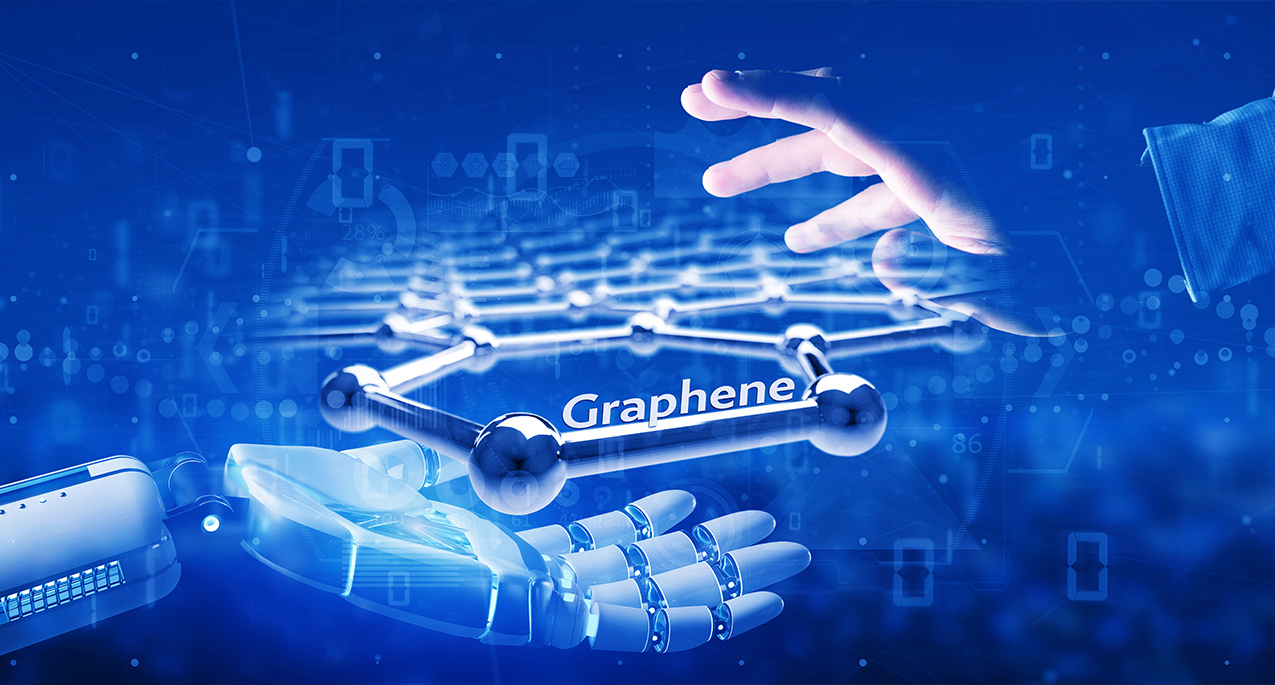
In the exploration and application of graphene, CHINT has always been at the forefront of the industry, fully leveraging both internal and external resource advantages to continuously expand the industrial application and promote industrial development of graphene composites, plating, corrosion protection, heat dissipation, advanced lithium batteries, and positive and negative electrode materials.
After nearly 10 years of innovative incubation, CHINT has established a graphene R&D platform, along with industrialization capabilities in composite materials, surface treatment, and polymer battery technology, collectively referred to as "One New and Three Tai." The graphene composite contacts and advanced plating technology are used in terminal products, industrial products, frames, and plastic shell products, which significantly improves the product's lifespan, electrical conductivity, and corrosion resistance, and brings customers better product experiences with higher performance.
Graphene Surface Treatment Technology
Graphene composite plating (coating) is a new type of composite material formed by combining graphene with metals or other materials. This type of composite material not only inherits the notable physical and chemical properties of graphene itself, such as high electrical conductivity, high strength, high transparency, and good chemical stability, but it also enhances certain properties of the matrix material.
The following will detail the types, characteristics, and applications of graphene composite plating (coating).
Types
There are three types of graphene composite plating (coating):
1. Metal-Graphene Composite Plating
This is one of the most common types. It is formed by adding graphene to a metal plating solution and using electroplating technology to form a uniform composite plating layer on a metal substrate. Typical examples include silver-graphene composite plating, nickel-graphene composite plating, etc. These platings not only improve the electrical conductivity, wear resistance, and corrosion resistance of metals but also reduce the amount of material used, making it lightweight.
2. Polymer-Graphene Composite Coating
This is another common type. Graphene in this case is dispersed in a polymer matrix and formed into composite coating through spraying, dipping, and more. The composite coating is used for anti-corrosion and anti-static purposes thanks to its high mechanical and chemical stability.
3. Ceramic-Graphene Composite Coating
Graphene can notably enhance the ceramic materials’ toughness, electrical conductivity, and thermal stability. The ceramic-graphene composite coatings are therefore applicable for extreme environments, for example, high temperatures and high pressure.
Characteristics
The characteristics of graphene composite plating (coating) include:
1. High Electrical Conductivity
The addition of graphene greatly enhances the electrical conductivity of the composite plating, making it highly valuable for applications in electronic devices, electromagnetic shielding, and more.
2. Enhanced Mechanical Properties
With its high strength and high modulus, graphene can largely improve the hardness and wear resistance of the composite plating, extending the service life of the material.
3. High Corrosion Resistance
Graphene can act as a dense physical barrier. It helps effectively prevent the intrusion of corrosive media and improve the corrosion resistance of the composite plating.
4. Lightweight
Compared to traditional metal plating, graphene composite plating helps reduce weight without compromising performance. It is particularly applicable in the automotive and aerospace industries.
Applications
Graphene composite materials are used in various fields:v
1. Electronics Industry
Graphene composite materials, used as conductive coatings, can improve performance and reliability for products like flexible PCBs, touch screens, and solar panels.
2. Automotive
Graphene composites can be used for automotive body lightweighting, anti-static treatment, electromagnetic shielding, and more. This contributes to improving vehicle safety and comfort.
3. Aerospace
Used as protective coatings on parts of the aircraft, the graphene composite materials can reduce the overall weight of the aircraft and therefore improve flight efficiency.
4. Energy Storage
Graphene composites can be utilized as electrode materials or additives in energy storage devices like lithium-ion batteries to improve their energy density and cycle life.
5. Corrosion Protection
These graphene composite materials find their applications in corrosion protection. They can extend the service life of metal structures under extreme conditions, such as marine engineering and chemical pipelines.
Preparation Methods
1. Electrodeposition
Adding graphene nanosheets to the electrolyte, graphene composite plating can be formed on the substrate surface through electrochemical reactions. This method is simple to operate and relatively low in cost.
2. Chemical Vapor Deposition (CVD)
This method allows for directly growing a graphene layer on a metal substrate and then transferring the composite to the surface of other materials. The quality of graphene prepared by this method is high, but the cost is also high.
3. Sol-Gel Method
This method involves dispersing graphene in a sol, coating the sol onto the substrate surface through dipping, spraying, etc., and curing it into films. This method is suitable for preparing large-area composite coatings.
4. Spray Pyrolysis
This method involves the spraying of a solution containing graphene precursors on a high-temperature substrate and forming a composite plating layer through a decomposition reaction. The method will be suitable for preparing composite materials for use in high-temperature environments.
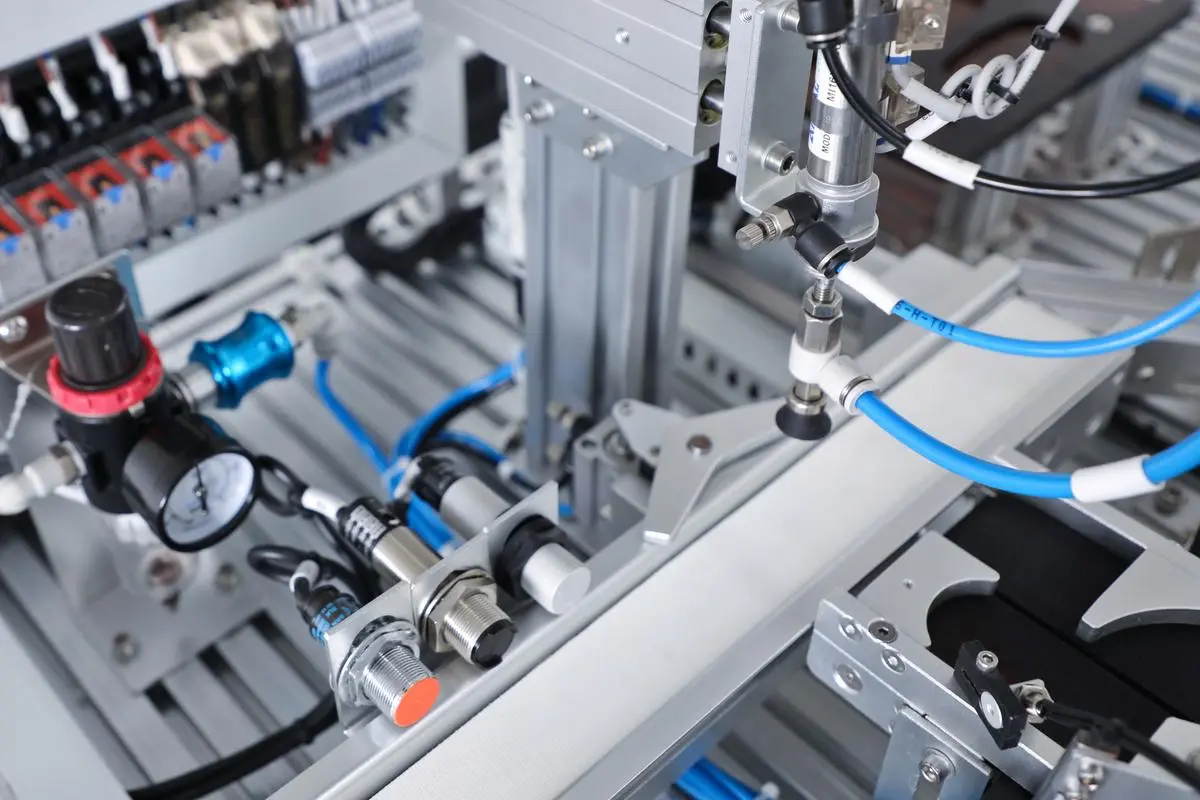

Graphene Composites Empower Electromagnetic Relays
Electromagnetic relays are crucial electronic control devices that enable the control of larger currents or voltages with smaller ones, facilitating remote operation and automatic control functions. They have found extensive applications in the modern industrial control sector.
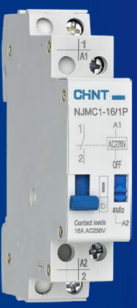
CHINT NJMC1 (Silver-Graphene Plating)
The NJMC1 Pulse Relay is a mechanical bistable relay that changes the contact state through input pulse signals. Compared to conventional relays, pulse relays do not require continuous electrification when the armature is closed, thus featuring low power consumption. This type of electromagnetic relay can switch currents of up to 16A or 32A, with both AC and DC specifications available, making it widely used in circuits that require frequent switching.
The internal contact components of the NJMC1, i.e., contact plate + wiring plate, have adopted a silver-graphene plating process in place of the "silver plating + silver covering" process, enhancing the product's electrical life from 80,000 to 160,000 cycles. This effectively extends the product's service life, reduces maintenance costs, and meets customers' demands for high-reliability usage.
Common Application Scenarios:
- Building Automation: In building automation systems, the NJMC1 Pulse Relay can control the operation of lighting, air conditioning, elevators, and other equipment, achieving energy savings and intelligent management. For example, upon detecting someone entering a room, sensors send a pulse signal to automatically turn on the lights.
- Security Systems: In alarm systems, when detectors sense anomalies, they can trigger alarms or activate cameras by sending pulse signals. For access control, after verifying identity through card readers or password inputs, pulse signals are sent to control the opening or closing of door locks.
- Industrial Automation: In factory automation production lines, the NJMC1 Pulse Relay can be used to control the switching of motors, solenoid valves, indicator lights, and other devices, achieving automated control. Used for controlling the start/stop of conveyor belts, the action of cylinders, etc., they improve production efficiency and safety.
CHINT NXJ (Silver-Graphene Plating, Nickel-Graphene Plating)
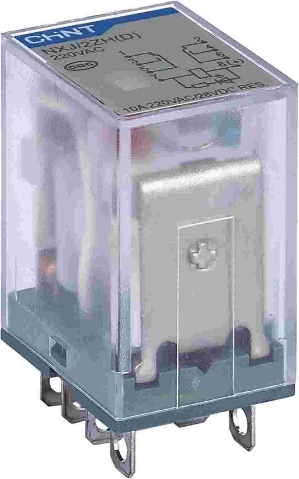
The Kunlun Series NXJ Miniature Electromagnetic Relays come with four contact forms to meet various circuit switching needs: 2Z, 3Z, 4Z, and 2ZH. They feature high contact reliability, are suitable for PLC control, and have a transparent dust cover and an optional status indicator light for an intuitive display of the electromagnetic relay's working status.
Contacts, the internal contact components of the NXJ, have adopted a silver-graphene plating process in place of the "silver plating + silver covering" process, capable of meeting the conduction requirements of weak electricity at 5VDC 2mA. Moreover, the NXJ's core, armature, and yoke have also adopted nickel-graphene plating in place of nickel plating, which eliminates the need for surface oil-based protective agents. This means it can undergo a salt spray test for up to 24 hours, providing greater stability.
Common Application Scenarios:
- Industrial Automation: NXJ Miniature Electromagnetic Relays, with their high contact reliability, are suitable for PLC control systems and handling small load currents of less than 10mA for signal conversion, isolation protection, and expansion of control interfaces.
- Home Appliances: NXJ Miniature Electromagnetic Relays are used to control power switches and ensure the normal operation of equipment. They are especially suitable for devices with higher voltage and current requirements, such as air conditioners and refrigerators, and can easily cope with humid environments.
- Others: In industries such as petrochemicals, marine environments, sewage treatment, and food and beverage processing, NXJ Miniature Electromagnetic Relays can effectively resist the erosion of dust, corrosive gases, and liquids.
CHINT JZX-22F, JQX-13F, NJDC-17 (Nickel-Graphene Plating)
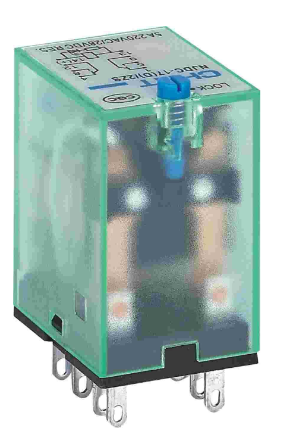
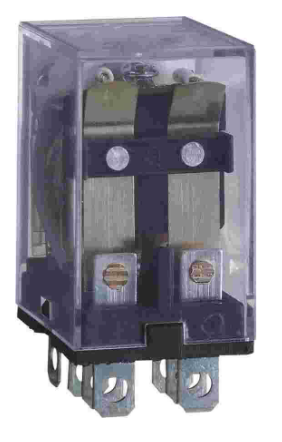
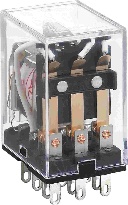
The JZX-22F, JQX-13F, and NJDC-17 Miniature Relays also feature nickel-graphene plating rather than nickel plating for their core, armature, and yoke components. It eliminates the need for surface oil-based protective agents and can undergo a salt spray test for 24 hours.
Which Electromagnetic Relay to Choose
JZX-22F: It offers a higher mechanical life, with 2Z/4Z specifications reaching up to 50 million cycles, suitable for signal transmission and circuit control.
JQX-13F: It features a 10A high current switching capability, suitable for applications requiring larger contact capacity.
NJDC-17: It is equipped with a self-locking test button for easy testing and maintenance.
Conclusion
Crafting robust products with advanced materials, CHINT continues to break new ground as an innovator, consistently increasing investment in research and development in the field of new materials and exploring the endless potential of graphene and more. CHINT's continuous technological innovation can meet the demand for higher-quality products like electromagnetic relays and inject strong momentum into the industry's high-quality development.