

What Is a Power Relay?
It is a switch that comes with an electromagnet to close or open a circuit. Mostly, it uses an armature, an electromagnet, contacts, and a spring. Generally, a power relay gets power from the battery source, and the electromagnet draws the armature. Also, it includes a moveable arm made of iron. It uses a spring to hold the armature in place. The armature gets pulled to the coil directly to reach contact and close the circuit.
When the relay is in the closed position, the coil will pull the armature from the contact. That will open the circuit. You can operate a power relay in low voltage conditions. However, a power relay switch can be ideal in high voltage settings. This unique feature makes a power relay ideal for different applications.
What Is a Power Relay Used for?
You can use a power relay in different industries. These switches are useful in audio amplification and telephone systems. You can also use them in automotive electronics and computer systems.
The objective is to relay any signal from one circuit to another. Also, automobiles have many electrical systems and devices. All of them use a 12-volt battery as the power source. Hence, power relays can be ideal in these applications.
Some cars will have more than twenty power relays that manage everything from the windshield wipers to the horn to the power train system.
What Is PCM Power Relay?
There will be many functions in a car. A computer control all of them. Also, it manages the engine. However, there will be an engine control module. That will manage the engine and its related functions.
The Engine Control Module or ECM will monitor the operation. Also, it will control the power distribution to the fuel and injection systems. It will check the engine timing, emissions, ignition, exhaust gas circulation, and other functionalities within your vehicle. However, the ECM will need the power to transfer it to each system.
You will find the power distribution center of a vehicle under its hood. It controls all the relays and fuses of a car. The PCM power relay or ECM power relay work as a switch and transfer power to the ECM. However, if the ignition key turns off, the switches within the PCM power relay will not receive battery power. As a result, your vehicle will not operate properly.
Also, when a PCM relay stays open, it cannot transfer power to the ECM. Hence, you cannot turn on and start your vehicle. When it remains closed, the ECM will receive too much power. That will lead to battery drainage.
What Is a Power Relay Module ?
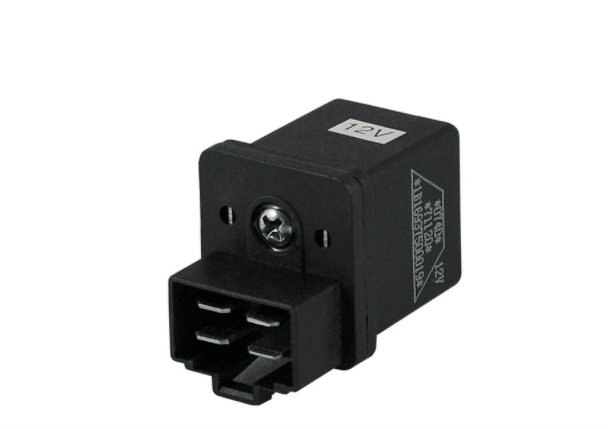
It is an electrical switch that uses an electromagnet for operation. When it comes to the electromagnet, it gets activated by a low power signal. The signal comes from a microcontroller. After activation, the electromagnet will pull to either close or open an electrical circuit.
A relay will have a wire coil with a solenoid or soft iron core wrapping. Besides, an iron yoke will deliver a low path for the magnetic flux, sets of contacts, and a moveable iron armature. The moveable armature will get attached to the yoke, and then it will connect to one or more contacts.
A spring will hold them in place, and the armature will create a gap in the magnetic circuit if the relay becomes de-energized. At this stage, one or more contacts will remain closed. However, others will stay open.
When the current passes through the coil, it will produce a magnetic field and activate the armature. The movement will break or make connections with the fixed contacts. If the relay becomes de-energized, the open and closed contacts will break the connection.
While switching off the current, the armature will return to the relaxed position by force. Spring will provide the force, but it can also use gravity in some applications. Most power relays operate fast and can be perfect for different applications. However, you will need the best quality products in high current applications.
What Is Reverse Power Relay?
It works as a directional protective relay, and the objective is to prevent the power from flowing in reverse directions. You can use these relays in an application when a generator runs with another generator or utility in parallel. It will prevent the power of another generator or utility from flowing back to the active generator in a condition when the output fails.
The relay will monitor the power. When the generator output is below the preset value, it will disconnect the generator quickly to prevent power from flowing into a stator coil.
Also, the generator output might not work due to issues in a prime mover, engine, or turbine. If the prime mover stops working, the generator will not produce power, and it might start getting it from other sources. The reverse power relay can sense any reverse flow direction, and it will disconnect the generator to prevent any damage.
However, you will need quality power relay products to get more benefits. If you want the best products and a durable result, you can consider CHINT power relay products.
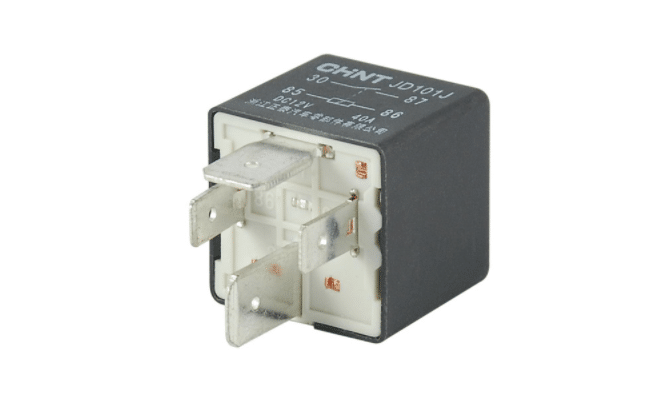
CHINT manufactures a wide range of power relay products. We can take the example of the JD101J Power Relay, JQ103B Power Relay, JD2324 Power Relay, Q103-1 Power Relay, JQ104 Power Relay, JQ103A Power Relay, and JD101K Power Relay.
All of them are easy to install, quality made, and durable. Also, you can use these switches for different applications. You can find the best one for high voltage and low voltage settings.
Conclusion
A power relay can support the operation of vehicles, telephone, telegraph, and computer systems. These products are versatile, and you can use them for different applications.
However, you will have to use quality power relay products to get more benefits and fewer replacements. You can consider CHINT since the manufacturer has earned a good reputation for quality and reliable products.

-metalclad-AC-enclosed-switchgear-banner.png)