


Table of Contents |
Do you know about an alternative method to start the machine vehicle’s motors? If yes, what is that alternative solution that you know? It is possible by soft starter. In this article, we will discuss the soft starter device and how it works. The basics of a soft starter and its function are discussed below for your understanding. Additionally, you shall also learn about VFD and how it differs from soft starter devices.
What Is a Soft Starter?
Commonly, the electric motor requires heavy current or inrush of power to their nominal working speed. Hence, a soft starter, a type of motor starter, is used to restrict the inrush current to the motor or reduces the current surge significantly. It is an additional device used for different start-up methods in motors. The device is added to an electric motor to reduce the strain on the electric motor. A soft starter for the motor achieves the results gradually by accelerating the voltage applied to the electric motor.
The gradual application of voltage enhances the smooth acceleration of motor power. Why is it slow and steady? A sudden increase in voltage may damage the motor and may result in a power burst. As a result, the machine may be damaged without any use.
When you compare the traditional startups with the soft starter startups, you shall see a major difference. Yes, typical startups allow the electric current to flow fast to the motor while in a soft starter, the flow of current is steady and slow.
How Does a Soft Starter Work
Soft starters allow only a minimum or slow flow of current to the motor. How does it become possible? It becomes possible by reducing torque with the help of solid devices used by the soft starter. The soft starter devices have the capabilities to control one to three phases. You can get tremendous results with the three phases controlling feature of a soft starter.
What does a soft starter use to control the current flow? The working principle of soft starter is that it uses thyristors to reduce the current flow to the motor. Also, it uses silicon-controlled rectifiers. The voltage is reduced by these silicon rectifiers in the soft starter. The working status of the device changes during off and on status. During ON status, the current flow is allowed, while in OFF status, the current flow is not allowed by the device.
How Do Soft Starters Reduce Starting Current?
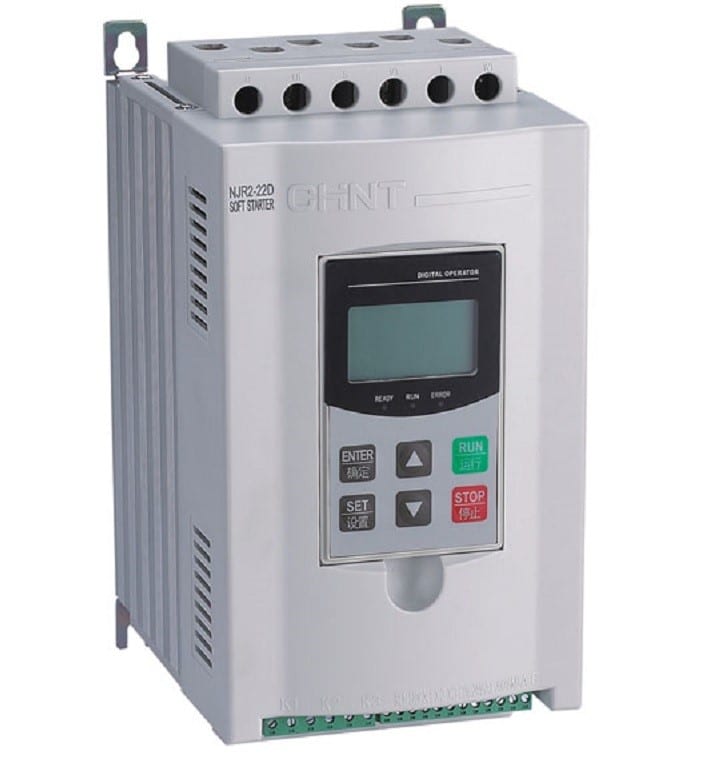
Various features of soft starters, such as stop the current flow, energy-saving, and other functional features make it a unique device. In common, starting current multiple and starting torque multiple are the two major features of asynchronous motors. The soft starter reduces the power voltage by acting on starter torque and starter current.
The surge current flow is drastically reduced by the soft starter device to a great extent. This electric device plays a significant role in controlling the rising temperature of the electric motor. The temperature rise factor is limited by the soft starter device to the core. Hence, the life span of the motor is improved to a great level by the soft starter device.
What’s the Difference Between Soft Starter and VFD?
We have already discussed a soft starter above in depth. You shall have to learn about VFD further. A VFD is a variable frequency drive that is yet another motor device like the soft starter. The VFD device controls the speed of the AC induction motor and also protects the motor. The motor speed of the motor is maintained by the VFD throughout the run cycle.
Soft Starter vs VFD
Speed control option
A soft starter is a better option for you if speed control is not given importance even though an inrush of current is high to the motor.
VFD is an exact chance to control speed.
Price
The price of a soft starter is low than VFD starter.
Size
VFD size is normally bigger than the size of a soft starter.
Advantages of Soft Starter devices
- Less energy use
- Power surge use is restricted
- Acceleration time is adjusted.
- Overheating risk is reduced
- Operation efficiency is more
- More life span.
Advantages of VFD
- Adjustable speed
- No power usage when not in use
- convenience and versatility to the user
- Self communications
- Overload protections
- Torque control power
Conclusion
The above discussions help you to choose a soft starter or VFD depending upon your choice. The benefits of VFD and soft starter give you an idea of choosing the right one. If you are economically conscious, selecting soft starter is a better option for you. Also, a soft starter is a better choice for people who consider space as an issue. Space constraint places can have soft starters instead of VFD. The soft starter requires only minimum space to function.
You have to decide the type of device to use for your requirement. Either VFD or soft starter machine use depends upon your application. When you compare the soft starter with VFD, you will have to spend more money and space for the VFD device. You can analyze and compare the merits and demerits of soft starters and VFD to your demand and need. Pick the best device based on features and advantages.
You shall consult with an expert about your decision to choose the right device that suits your expectations. These details would give you a clear understanding of the soft starter. So, you can make a wise decision about the purchase of the device. Indeed, the soft starter fulfills your core need without any flaw.