

Table of Contents |
Everyone staying in places where they can get access to power will always desire to install electricity in their residential places. This is due to overdependent on the electrical energy in running different home appliances.
For this reason, when having power installed at your home, then you will automatically come across a single-phase meter as most residential homes get their power from a single-phase power supply.
What is a single-phase meter?
Before looking at a single-phase meter, it is important for you to first understand what a phrase means when dealing with electricity. For this reason, a phase in electricity is the voltage or current on a live cable and also a neutral cable.
The instantaneous voltage signal of a phase can be drawn on a graph by use of an oscilloscope. A phase in an electrical circuit will depend on the distribution of the load that corresponds to the unit type. For this reason, different types of phases exist today.
The most common type of phase used mostly in load distribution is the single-phase power. In a single-phase power, also referred to as 1-phase, only two wires are required to distribute the power. This makes them have less power as compared to three-phase power.
From there, we can now define what single-phase power means when it comes to electrical distribution. It is a type of phase that uses a neutral and a phase cable to distribute Ac power to the circuit. The phase cable carries the load whereas the neutral cable completes the circuit for the return of current.
It is sometimes called a residential voltage as it is the type of phase used in most homes. The most common voltage distributed by a single-phase meter is always 230V with an approximate frequency of about 50Hz.
When distributing the single-phase power to a circuit you will need to have a single-phase meter. A sing phase meter also referred to as credit meters, KWh meters, or check meters are electrical meters designed for use in measuring the power consumption in a single-phase power supply. These meters, however, only deal with Alternating current (AC power) supply and not the Direct current (DC) power.
Types of Single-Phase Meter
There are different types of single-phase meters commonly used in many electrical distribution circuits today. They include;
Surface / Wall Mounted Meters
This is the type of single-phase commonly used by many utility companies for measuring power consumption. Most of the Surface/wall-mounted meters have a typical rating of 100Amp which enables them to cope with modern home demands. This type of single-phase meter is always simple to read as it only shows the power consumed in terms of kWh units.
DIN-Rail Meters
This is a type of single-phase meter that is designed to fin on the DIN rail as in the case of RCDs and MCBs in the circuit boards present at homes that has an electrical installation. The DIN Rail meters are of different varieties and sizes depending on the different loads they accommodate and also the electrical parameter ranges.
Smart Meters
These meters are designed to incorporate various types of sim cards in the exact way a mobile phone does. This makes the reading of data to be done remotely, therefore, saving on the manual reading of meters. The smart meters also provide additional real-time data and information to consumers remotely via a home display or online.
Prepayment Meters
This is a type of meter that allows the electrical supply to be cut off when the customer fails to top up the power. Traditionally, these meters were known as coin meters before they were later improved and started accepting the use of cards when making their payments.
What is the difference between single-phase and three phases?
There are many differences between single-phase power and three-phase power that can be analyzed in the following aspects;
Required Wirings on Power Supply
In three-phase power distribution, three wires are required as conductor wires and also an additional neutral wire. In other words, it involves the use of three-live wires and one neutral wire and hence making the total number of the wires used to be four. On the other hand, a single-phase power on requires two wires whereby one wire is used as a conductor and the other as a neutral wire.
Voltages
The supply voltages in a sing phase power start from 230V, on the other hand, a three-phase power has a total voltage supply of up to 415V.
Its place of utility
A single-phase power supply is commonly used in homes, where a lower supply of power is required to run various home appliances whereas three-phase power supply is used in industrial and commercial companies that require a larger amount of power to run heavy load electronics.
Efficiency
For single-phase power, they will always require other devices like motors for startups as they cannot start naturally by themselves thus making them less efficient. On the other hand, the three-phase power is capable of starting up itself without the use of any device externally.
Application
Single-phase power is widely used in homes due to its lower power supply which can only support the operations of home appliances. On the other hand, three-phase power supplies are commonly used in data centers, ship boards, aircraft, and other electronics with heavy loads above 1000 watts due to their high-power supply.
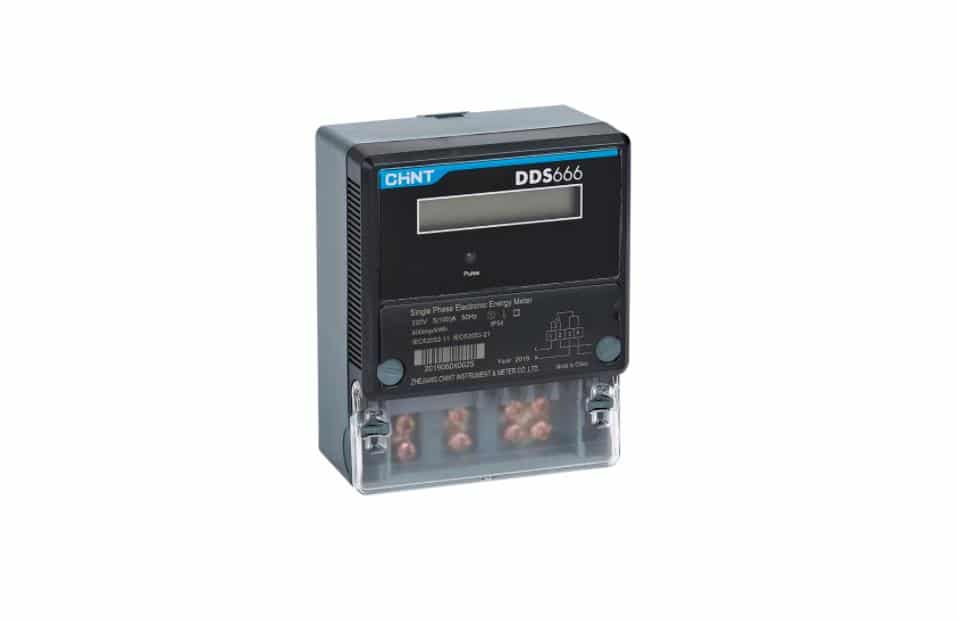
CHINT single phase meters
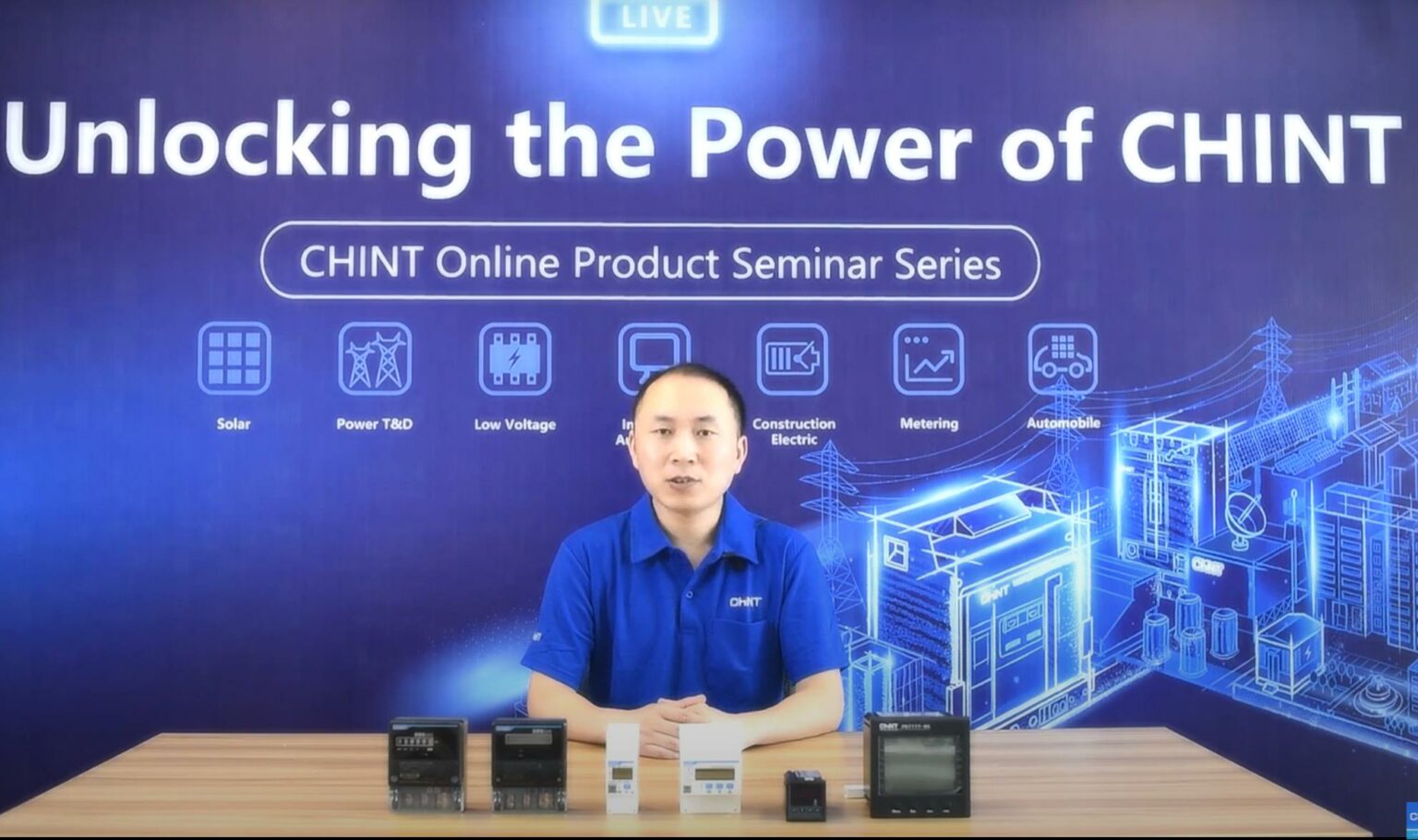
If you are planning to purchase a single-phase meter for your residential home or apartment, CHINT Single-phase meters will be the best option for you to consider. They have proven to be more efficient in providing quality services when used to measure power consumption. These CHINT single phase meters include;
DDS666 Single-phase electronic meter
This is a reliable meter with IC choice, Multiple encryptions of data, and also has a balance alarm. In addition, they are suitable for measuring the active power with a voltage of 220V and a frequency reference of 50Hz. It is simple to use and provides accurate measurements of power. Furthermore, this meter has a compact size with a simple look and is also easy to install.
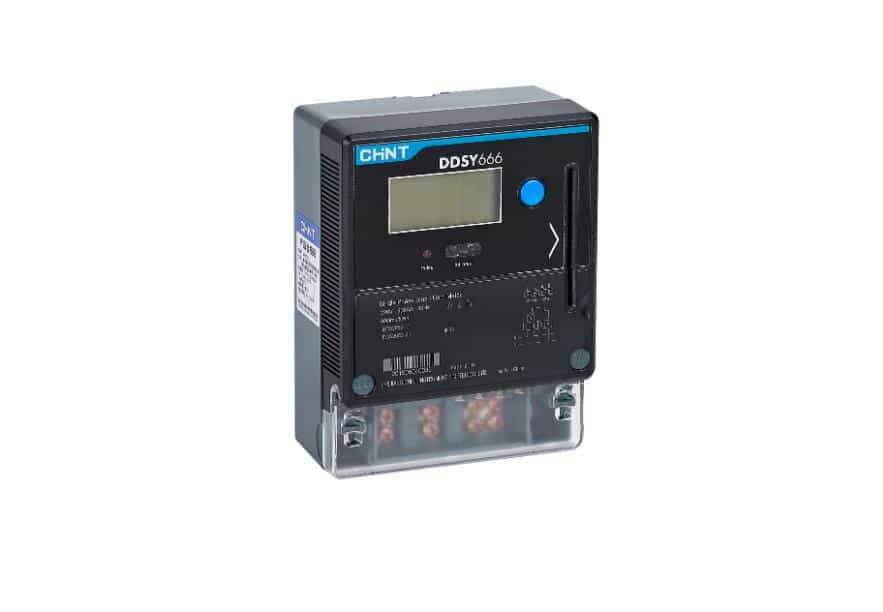
DDSY666 Single-Phase Smart card meter
This is also a perfect meter for you to consider when choosing a single-phase meter for your power top-up. It has a balance alarm, an IC card payment, and also Multiple encryptions of data. Furthermore, this meter has pre-sale electricity which enables it to automatically shut down when the power is over.
Conclusion
Many people prefer using electrical appliances because electricity is a renewable source of energy and hence cannot be depreciated. However, the over-reliance on electrical energy has led to an increase in demand for electric power today.
This has also been witnessed in the increased use of electrical appliances in our daily lives. For this reason, almost everyone will desire to have electricity installed in their homes or residential places. This has made a single-phase power supply to be more of use to many consumers.