


Table of Contents |
All the electrical equipment consumes power while operating. That power is real power. However, there is also reactive power. But the reactive power is different from real power. The devices will not use this power directly. But it can contribute to the increasing monthly bills. Both real power and reactive power come together to become the apparent power.
Apparent power is related to the power factor. If you want to know more about power factor and power factor correction, you can consider the following. We will also cover the use of power factor, the importance of power factor, power factor correction capacitor, and power factor improvement. Besides, we will discuss the power factor correction formula.
Power factor is a connection between apparent power and a real power. We can have poor and good power factors based on the relationship between real power and apparent power. With poor power factor, the electricity bill will be more. Here the power factor correction comes in. Let’s cover more details.
What Is Power Factor and Power Factor Correction?
Now, you know about the real power, apparent power, and power factor. Power factor is the correlation between real power and apparent power. What will happen if you have a poor power factor? You will end up spending more on energy consumption. Can you make it right? Yes, you can consider power factor improvement. We will know how to do this.
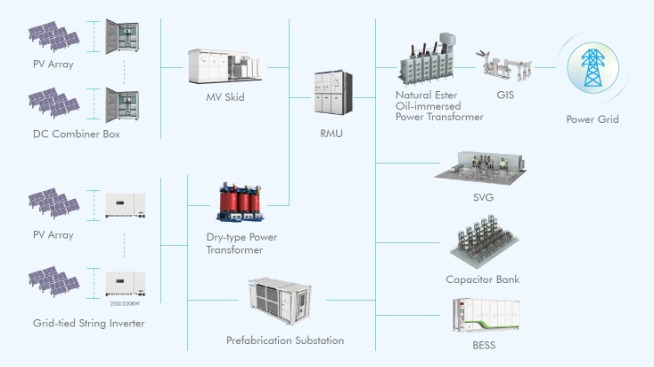
As stated earlier, power factor correction is a technology. You can install this technology to minimize your electricity bill. The technology will maintain the reactive power consumption level. As a result, the power factor will not fall below the desired figure, and you can manage your energy bills. You can find the best electrical equipment and technology from CHINT .
The power factor correction will increase the load of the power factor. Also, it will boost the efficiency of the distribution system. It will correct the linear loads with a passive power factor correction capacitor. Also, the non-linear loads will deform the power drawn from the system.
In these conditions, passive and active power factor correction can help. They can counteract to improve and distortion of the power factor. The device that is used for the power factor correction will be at the central substation. It can correct the power factor and help with a lower power bill.

Why Power Factor Correction Is Necessary?
We all should know about power factor and power factor correction to control our energy bills. By following a few simple steps, you can reduce the power bill. Also, it will save you a lot in the end. From the above, you might have realized that you pay more on reactive power. However, your devices do not use this power directly. Hence, there is no point in spending on that extra charge. With improved power factor results, you can save and use that money for other purposes. Apart from that, a good power factor will boost the longevity of your electrical devices. Benefits are many, and you will have to know how to do it right and get all the advantages.
Most power suppliers will charge you for kW (for the base load). They will also charge for the maximum demand tariff. When the maximum demand tariff will be measured in the kVA, the power factor will be improved. Also, it will minimize the kVA of your installation. As a result, there will be lower energy bills and less maximum demand tariff. With this installation, you can expect long-term benefits.
You might be thinking that why you need a power factor correction. As stated above, there is a network regulation for the minimum power factor. The company will charge you more if you do not meet the minimum power factor. The determined value will vary based on the region.
It is worth mentioning that a poor power factor will draw more power than an improved power factor for the same amount of power consumption. By making improvements in the power factor, you can minimize power consumption. The technology will enable your system to draw less reactive power. Hence, it can help to reduce monthly energy bills. You can manage the capacity charges as well.
The payback period for your power factor correction will be between one and three years. Therefore, you can consider this investment to get benefits every month. When it comes to poor power factors, they can lead to voltage drops and power losses. Both these factors can lead to overheating and cause motor failure. If you have a poor power factor in your electric system, you can install power factor correction technology to avoid costly damages. This addition will lower the electric demand in your system and improve efficiency stability. Apart from that, power factor correction can enable you to know the level of your power consumption.

How Do You Calculate Power Factor Correction?
Now you know how power factor correction is helpful to lower the energy bills and prevent any damage due to overheating. Next, we will cover how to calculate your power factor correction. You will have to go through the following three steps.
Step 1
Start with the actual load. You will have to calculate kW (actual load)
Kw=Current I x Volts V x Power Factor Pf x√3
Step 2
In this step, you will have to calculate kVAr (the Required Power Factor Correction)
kVAr Power Factor Correction= KW (TanΦi – TanΦd)
Φd =Required Power Factor Pf
Φi = Initial Power Factor Pf
Step 3
Finally, you will have to calculate kAVr (Actual Power Factor Correction)
kVVr Pf= TanΦi – Correction kVAr
By following the above steps, you can calculate your power factor correction.
Conclusion
Power factor plays a significant role in increasing or decreasing your monthly energy consumption. If you realize that you have a poor power factor, you can consider improving it. A power factor correction technology can help in this regard. After this installation, you will have to spend less on energy consumption. Additionally, the electric devices will last long in the absence of overheating.