

Table of Contents |
What is Voltmeter
This device computes direct and changing electric flow voltages using a scale measuring millivolt, volts, and kilovolts. They offer both digital and analog meters where the digital ones have more accuracy, while the analog uses a pointer to show voltage.
The analogue version of the voltmeter uses electromechanical appliances where currency flowing over multiple wires is shown on the part where you read voltages. An electrostatic voltmeter also puts electrostatic power into use, but it only computes direct voltage and not the consequences of the current.
To measure low voltages, the recommended voltmeter is the potentiometer which compares the initial voltage to the one measured. As the electronic voltmeter, it measures direct and changing current using either amplification or rectification.
What is a digital voltmeter used for?
A digital voltmeter shows the voltage in a.c and d.c and employs a discrete numerical direct for reading rather than the constant pointer used in analog voltmeters. It is beneficial to use the digital voltmeter as its readings remove possible errors due to approximates, parallax, or the ones caused by operators.
The digital voltmeter can also use memory instruments to store and compute future data. Digital voltmeters today are smaller and thus easily portable; they are also affordable compared to analog voltmeters. They measure any slight change in volts in circuits.
The digital voltmeter is lightweight; it gives precise readings. It works in such a way that it moves from analog to a digital convertor when performing its function; thus, the analog signals are changed to train pulses, the same as the input indicator.
You can classify the digital voltmeter according to their A/D conversions; the categories include the integrating type, the ramp, the potentiometric version, the successive approximation, and the continuous balance type. It has the following blocks:
- The input signal that shows the voltage that is about to be measured
- The pulse generator is where the voltage comes from and employs digital and analog techniques to produce a rectangular pulse.
- Gate provides peak output on the condition that inputs are also high while not Gate turns work from the And gate upside down.
- A decimal display calculates the number of impulses and their duration and even shows the voltage value in an LCD or LED display.
The multimeter
This device can compute two or more voltages in volts, resistance in ohms, and current in amps, and it is a tool commonly used in electrical firms. Some multimeters offer advanced and unique features, making them suitable for performing multiple tasks.
They also come in analog and digital versions. The analog multimeters use the basic analog features to compute voltage, resistance, and current. However, the analog versions are defective when it comes to accuracy.
The digital multimeters have an LCD, an analog to the modern convertor, and a knob that allows you to choose the ranges you prefer. Digital multimeters are lightweight, and they are very affordable. When working with unique probes, they can also perform different parameters at higher frequencies.
Difference between Multimeter and Voltmeter
A multimeter and voltmeter both measure voltages, but they have various distinct features and functions that are discussed below:
- A multimeter serves multiple purposes and can compute parameters, for example, current, potential differences, capacitance, frequency, and more. In contrast, the voltmeter only measures possible differences in the 2 points of the electric circuits.
- The multimeter can calculate circuit resistance directly, meaning an ammeter on the side is unnecessary, while the voltmeter must use an ammeter to compute circuit resistance.
- You can use multimeters to check transistors and diodes, but the voltmeter cannot check transistors and diodes.
- For the multimeter, you can use it in place of the voltmeter, but this is not the same for the voltmeter.
- Multimeters are expensive since they have several parts to measure various things, while the voltmeter is quite affordable, especially the digital voltmeters.
- Multimeters have many applications to help them perform their multiple functions, while the voltmeter has a limited application area.
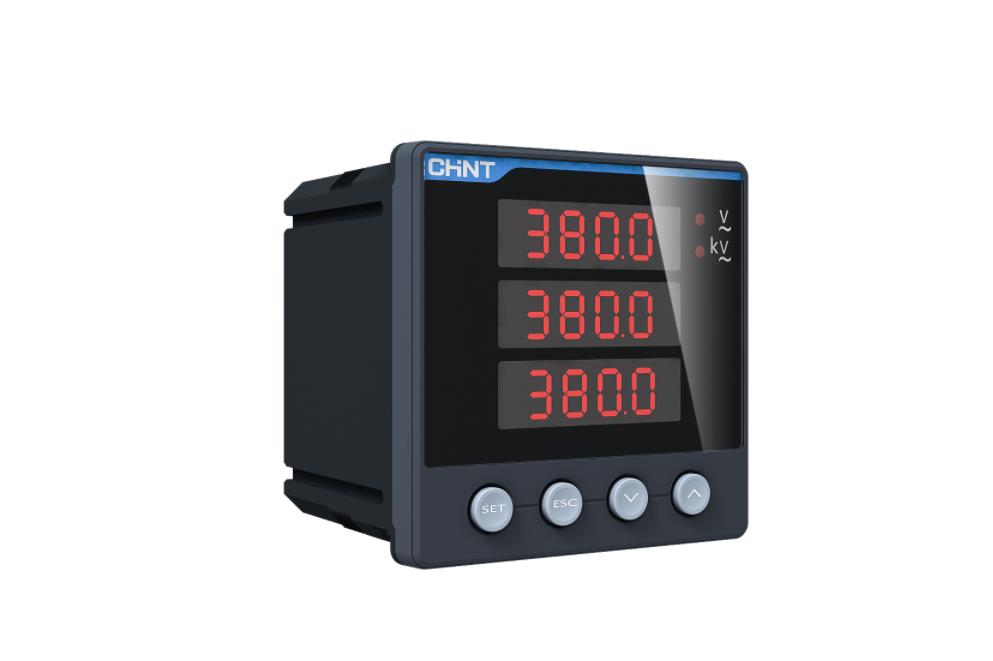
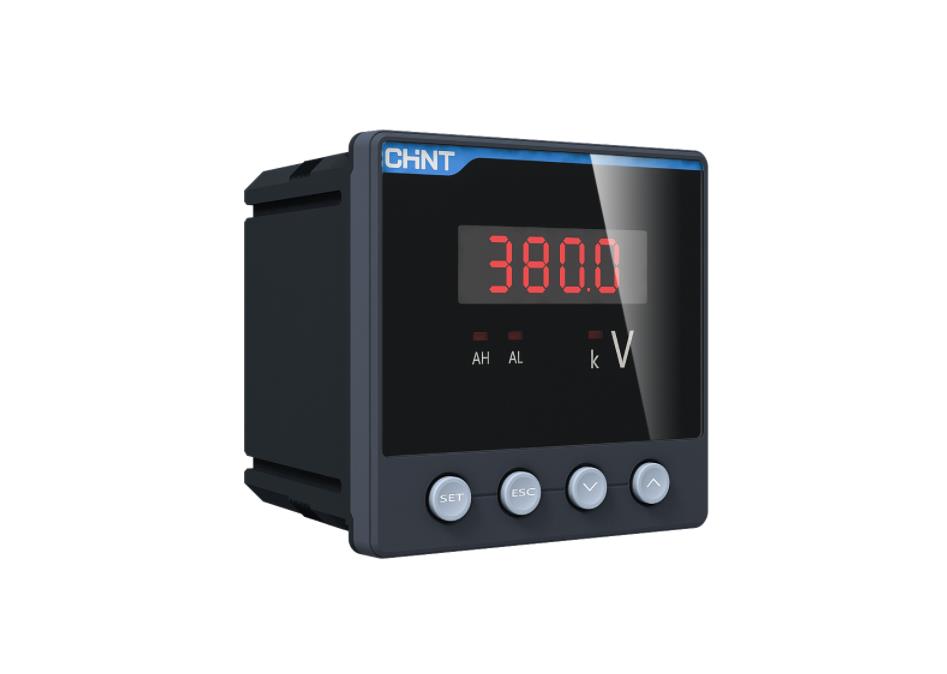
CHINT voltmeter
PA/ 666 Three phase digital ammeter/voltmeter
This chint voltmeter is used to measure real-time and indicate the voltage and current of the circuit. It comes with an extensible analog output, with a range of 0-10 MA,4-20 MA, and 0-20, which you can select according to the function you are performing and what it requires. On top of that, it has a relay switch, which is extensible with an output function; thus, you can realize an upper or lower communication configuration that allows you to set a communication pact and the baud rate.
PA/PZ666 series Single phase am meter/voltmeter
It also indicates current and voltage measurements for circuits and real-time measurements time. Depending on your selection, they offer an extensible analog output task with a range in currency from 0-20,4-20 and 0-10 Ma. Thanks to the extensible relay button, you can realize the lower and upper. Its communication configuration is the extensible RS485, and you can set the baud rate with the MODBUS-TRU communication procedure.
Conclusion
Voltmeters are incredible for measuring voltages since they specifically focus on their computation. The digital version is preferable due to the accuracy that it offers and its analog to digital convertor. If you are looking for a great digital voltmeter, you should go for the Chint voltmeters, which come in the PA/666 three-phase digital voltmeter and the PA/PZ666 series single-phase voltmeter.
With Chint voltmeters, you get to select your preferred voltage range, and they also offer communication procedures using MODBUS-TRU, and their communication configuration is the extensible RS485. However, digital multimeters are more desirable today due to their ability to multitask and the advanced options that come with them.
With multipliers, you can compute resistance, currency, and voltages. Therefore, with the apparent differences between the multimeters and voltmeters, you can select your preferred option depending on the required tasks.