Please enter keywords to search

Global |EN

Choose your country & Language

Asia Pacific

Australia & New Zealand
India
Indonesia
Malaysia
Philippines
Singapore

Middle East & Africa

Kenya
Saudi Arabia
South Africa
United Arab Emirates
Tunisia

Europe

France
Kazakhstan
Netherlands
Spain
Italy
Turkey
United Kingdom
Poland

Latin America

Brazil
Colombia
Ecuador
Peru

North America

Canada
Mexico
United States

Choose your country & Language

Australia & New Zealand
India
Indonesia
Malaysia
Philippines
Singapore
Kenya
Saudi Arabia
South Africa
United Arab Emirates
Tunisia
France
Kazakhstan
Netherlands
Spain
Italy
Turkey
United Kingdom
Poland
Brazil
Colombia
Ecuador
Peru
Canada
Mexico
United States

Please enter keywords to search

Your search term contains restricted words. Please use different keywords.
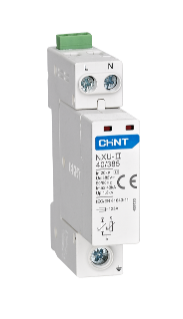
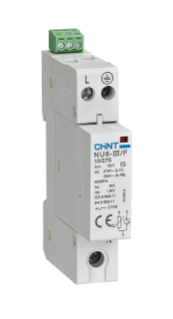
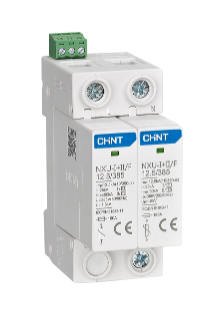
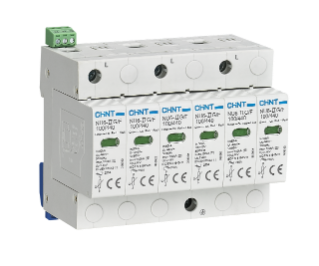
NXU -II G Low-Voltage Surge Protective Device
NXU-II GF  65-440  1P-NXU
NXU-II  G F 65-440-Side
NXU-II  GF  65-440  1P-NXU-Front
NXU-II GF  65-440  2P-NXU
NXU-II GF  65-440  3P-NXU
NXU-II GF  65-440  4P-NXU
NXU-II GF  65-440  1P-NXU
NXU-II  G F 65-440-Side
NXU-II  GF  65-440  1P-NXU-Front
NXU-II GF  65-440  2P-NXU
NXU-II GF  65-440  3P-NXU
NXU-II GF  65-440  4P-NXU

NXU -II G Low-Voltage Surge Protective Device

The NXU-II G Low-Voltage Surge Protective Device (SPD) is designed to protect electrical systems and connected equipment from lightning strikes and transient overvoltages. Built for 230/400V AC systems, it supports 1P to 4P configurations and operates reliably in TN-S, TN-C, TT, and IT grounding systems. Featuring a maximum discharge current up to 65kA, removable protection modules, and visual fault indicators, the NXU-II G ensures consistent system protection and simple maintenance in residential, commercial, and industrial applications.

Product Information

Recommend Blogs
NOVEMBER 13, 2026 From Component Search to Panel Layout: Using CHINT Data in the EPLAN Data Portal

Find CHINT components in the EPLAN Data Portal, import part data, and use available macros in schematic and panel-layout workflows.

NOVEMBER 12, 2026 Shunt Reactors in Power Systems: Purpose, Applications, and Selection

Learn how shunt reactors absorb reactive power to manage voltage rise on lightly loaded lines, and what engineers should consider when selecting and applying them.

NOVEMBER 12, 2026 What Instrument Transformers Are Used for: CT and VT Applications

Learn how current transformers (CTs) and voltage transformers (VTs) support metering and protection, and what to consider when selecting and installing them.

OCTOBER 27, 2026 Phase Loss and Reversal: How Phase Monitoring Relays Protect Three-Phase Motors

Learn how a phase monitoring relay detects phase loss and phase reversal, how it should be wired into a motor control circuit, and where its protection ends.

OCTOBER 27, 2026 A Practical Guide to Choosing a DIN Rail Power Supply for Industrial Control Panels

Choose a DIN rail power supply for an industrial control panel by checking output load, inrush, environmental derating, protection and PLC compatibility.

OCTOBER 27, 2026 Why Do Capacitor Banks Need Dedicated Switching Contactors?

A capacitor bank does not switch like a motor load. Learn how dedicated capacitor switching contactors manage inrush, switching duty and protection in power factor correction panels.

OCTOBER 27, 2026 Natural Ester vs. Mineral Oil Transformers: Which Fits Your Project Requirements?

Compare natural ester and mineral oil transformers across fire performance, environmental exposure, temperature behavior, maintenance and project fit.

OCTOBER 26, 2026 Industrial Energy Monitoring: How Smart Meters Cut Waste and Improve Power Reliability

Learn how industrial energy monitoring turns meter data into lower energy waste and stronger power reliability, with CHINT DTSU666-CT and PD7777 options.

OCTOBER 26, 2026 Static VAR Generators: A Practical Guide to Reactive Power Compensation

Understand reactive power compensation, how static VAR generators differ from SVC systems, and where CHINT NXW APF and SVG modules fit in industrial power systems.

OCTOBER 26, 2026 Control Relay Selection and Wiring Guide for Industrial Control Panels

Learn how to select and wire a control relay for an industrial panel, including coil voltage, contact form, load rating, suppression, and CHINT NXJ and NJX12 options.

Need Support From Us?

Blog
Blog

Find expert perspectives on the trends and technologies driving your business.

View Now
Download Center
Download Center

Download new and previously released documents including product document, solutions, cases, coporate report.

View Now
Contact Us
Contact Us

Reach out to us to receive more information, technical support, assistance with complaints and more.

Get Support
Collapsed
Expand

FAQs


What is the primary function of the NXU-II G Surge Protective Device?

It safeguards electrical systems and equipment from lightning surges and transient overvoltage, preventing damage to sensitive components and reducing downtime in power networks.


In what environments can the NXU-II G be installed?

It’s suitable for residential, commercial, and industrial low-voltage systems, including main distribution boards and sub-panels, especially where surge events are frequent.


What grounding systems does it support?

The NXU-II G can be applied in TN-S, TN-C, TT, and IT systems, offering flexibility for various regional and project requirements.


How does the user know when to replace the module?

The SPD features a visual indicator that turns red when the protective module fails. The removable design allows easy replacement without cutting off the circuit.


Is there an option for remote monitoring?

Yes. The NXU-II G/F version comes with a remote signaling port (auxiliary contact) to monitor SPD status remotely via building management or control systems.