

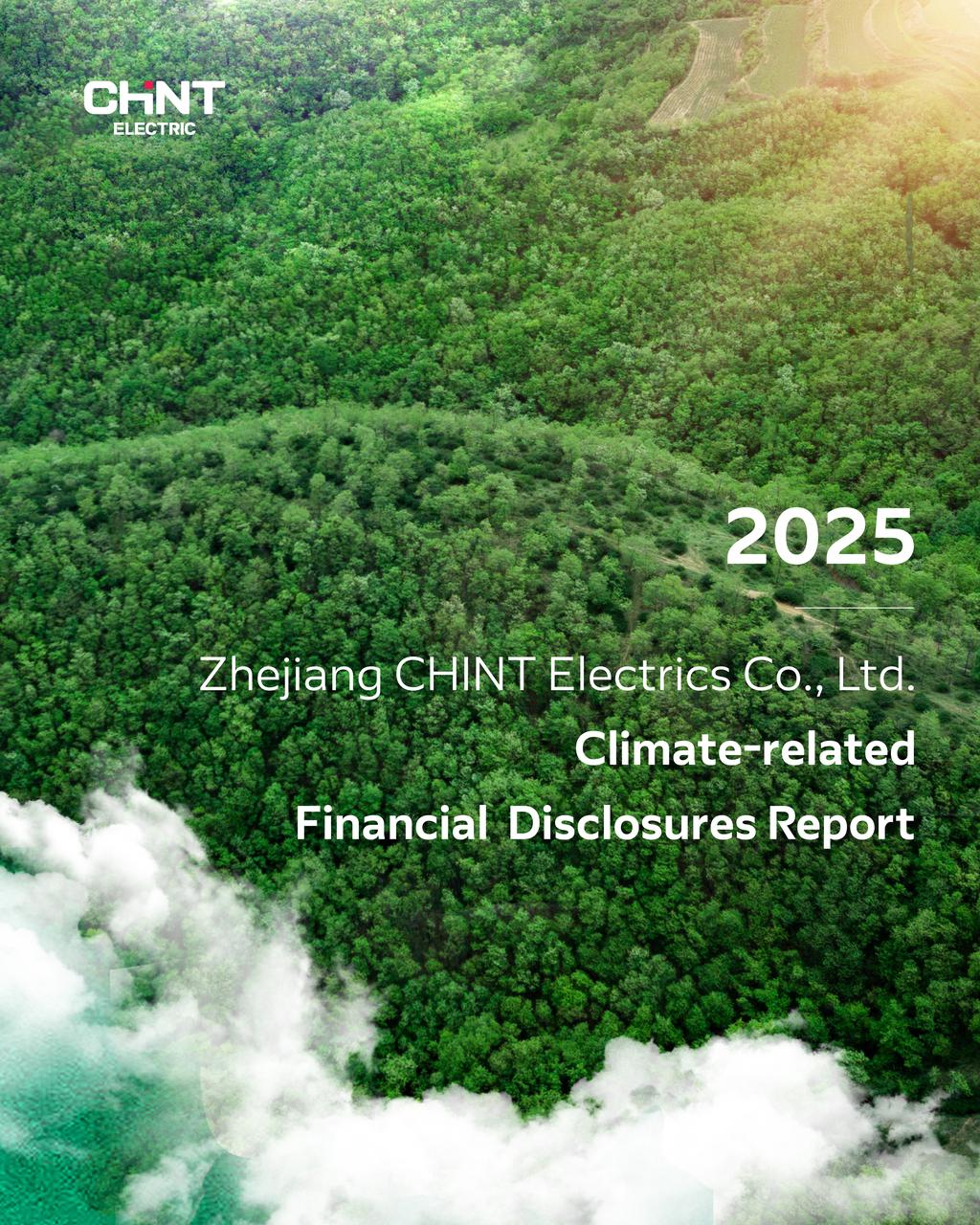
Against the backdrop of accelerating global climate governance and the in-depth implementation of China’s "Dual Carbon" goals, Zhejiang CHINT Electrics Co., Ltd. has recently officially released the 2025 Climate-related Financial Disclosures Report. This is the company’s first dedicated climate-related financial disclosure report, marking CHINT Electrics’ deep integration of climate governance and sustainable development into its business decisions. Through reliable actions, CHINT Electrics is comprehensively practicing the green development philosophy, clearly communicating its firm determination and practical achievements in addressing climate change to stakeholders, and supporting the company’s long-term sustainable development.
What is TCFD?
TCFD stands for the Task Force on Climate-Related Financial Disclosures. Its core mandate is to develop recommendations for climate-related financial disclosures, guiding enterprises to systematically disclose the potential impacts of climate change on their financial performance, operating results, and long-term value across four core dimensions: Governance, Strategy, Risk Management, and Targets & Metrics. This framework enables stakeholders such as investors and creditors to fully understand an enterprise’s climate governance capabilities and risk response levels, fostering a relationship of trust and collaboration.
CHINT Electrics strictly adheres to the TCFD framework, ensuring standardized and reliable climate-related disclosures through rigorous verification. The release of its TCFD-aligned report marks a strategic step to integrate climate factors into core competitiveness: through systematic climate risk management, the company empowers its business and delivers three key values to customers—greener products that reduce value chain carbon emissions with low-carbon, high-efficiency electrical solutions, a more trusted brand that wins the confidence of ESG-focused stakeholders via transparent disclosure, and more stable delivery that guarantees supply reliability under extreme weather conditions. Committed to setting a benchmark in climate-related information disclosure, CHINT Electrics aims to turn its robust internal green management capabilities into lasting market competitive advantages.
Climate Governance: Building a Three-Level Closed-Loop Management System
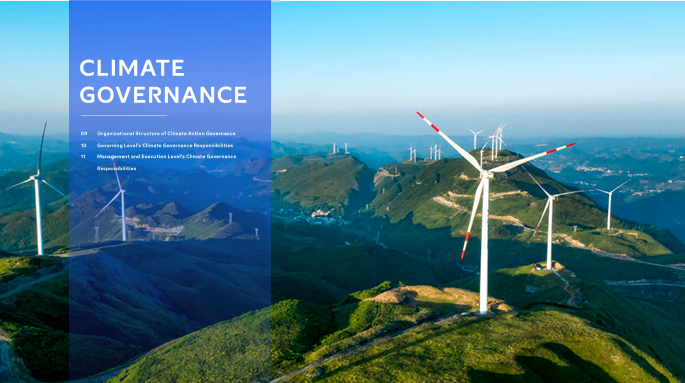
CHINT Electrics has established a top-down, clearly defined ESG governance structure, building a climate governance system with the Board of Directors as the highest governing body. Leveraging the three-tier ESG governance system of “Governing Body – Management Layer – Executive Layer”, the company forms a closed-loop management mechanism of “Strategic Planning – Implementation – Supervision & Evaluation”.
- Governing Body: As the highest decision-making body for climate governance, the Board of Directors receives at least one dedicated report on climate-related work annually, and is responsible for leading ESG strategy (including climate change management) and approving major matters. The Board has established a Strategy and Sustainability Committee, which is responsible for researching, evaluating and guiding specific work, and reports to the Board regularly. The governance team has over 10 years of professional industry experience, enabling it to accurately identify climate risks and opportunities.
- Management Layer: The Sustainability Office, as the core climate management body, is responsible for formulating climate action strategies, targets and policies, and coordinating risk and opportunity management. Relevant departments implement specific actions to advance climate initiatives across all business units.
- Executive Layer: The Climate Action Management Team is responsible for delivering climate target-setting and disclosure, establishing carbon accounting systems, advancing full-value-chain decarbonization and actions such as SBTi and CDP, identifying and managing climate risks and opportunities, and driving ecological and climate public welfare projects.
In 2025, CHINT Electrics continued to improve its climate governance capabilities by conducting ESG and climate-related training and integrating climate-related indicators into the annual performance evaluation of key positions. By building a professional climate management system, the company further enhances stakeholder trust.
Climate Strategy: Precisely Identify Risks and Proactively Seize Opportunities
CHINT Electrics conducts a comprehensive climate-related risk and opportunity assessment in accordance with the TCFD framework. For the first time, it adopts scenario analysis, using 2024 as the base year and 2050 as the target year. Combining IPCC’s RCP2.6 and RCP8.5 scenarios, as well as IEA’s NZE, APS, and STEPS scenarios, the company systematically evaluates the impacts of different climate scenarios on its business operations and financial performance.
- Risk Identification: The assessment identifies both physical risks (e.g., floods, wildfires, sea-level rise, maximum temperature increase) and transition risks (e.g., carbon trading, policy constraints, market changes). It focuses on evaluating the physical risk exposure of 6 major manufacturing parks and 40 key suppliers, ensuring the financial impact of current transition risks is manageable through comprehensive screening and scientific analysis.
- Opportunity Exploration: Focusing on four key areas—resource efficiency improvement, renewable energy application, low-carbon market expansion, and enhanced operational resilience—the company quantifies the development potential of its photovoltaic power station operations under different climate scenarios. By turning clean technologies into core growth drivers, CHINT Electrics aims to earn the trust of the market and its partners.

Climate Risk Management: End-to-End Control to Build a Solid Safety Barrier
CHINT Electrics fully integrates climate risk management into its enterprise risk management framework, establishing a full-process control mechanism of “Identify – Assess – Manage – Track”. The company systematically identifies physical risks, transition risks, and climate opportunities, and develops targeted response measures through regular risk scanning and cross-departmental collaboration. Building on the company’s overall risk management system, the Sustainability Office further promotes the formulation and implementation of management systems closely related to climate risks. Each department designates a primary responsible person to ensure the effective implementation of measures, safeguarding the company’s stable development with reliable risk management capabilities and building a solid line of trust with all stakeholders.
- Addressing Physical Risks: For extreme weather events such as typhoons and high temperatures, the company has established a tiered emergency response mechanism, conducts regular emergency drills, increases investment in emergency supplies, diversifies disaster losses through insurance, optimizes supply chain layout, and enhances disaster resilience.
- Addressing Transition Risks: In the short term, the company focuses on controlling key carbon emission hotspots and utilizing renewable energy. In the medium to long term, it will improve its proactive emission reduction system through process upgrades and fossil fuel substitution, manage carbon reduction costs, and ensure the achievement of net-zero goals.
- Supply Chain Risk Management: The company conducts physical risk assessments of core suppliers, implements sustainable procurement policies, adopts classified and tiered supplier management, provides ESG capacity-building training, and drives coordinated decarbonization across the supply chain.

Climate Targets and Metrics: Building a Foundation of Trust Through Reliable Commitments
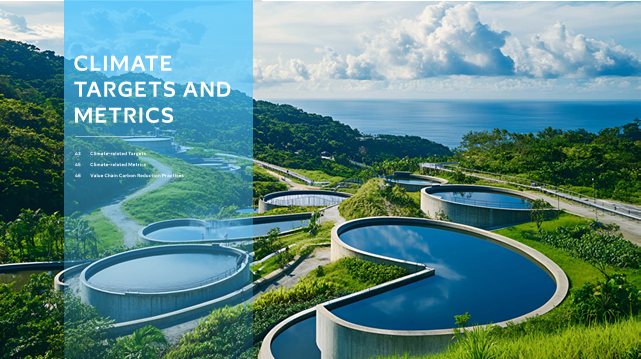
In 2023, CHINT Electrics took the lead in releasing its Carbon Neutrality White Paper, announcing its phased zero-carbon commitments: achieving operational carbon neutrality (including carbon offsets) by 2028, net-zero operational carbon emissions by 2035, and net-zero carbon emissions across the full value chain by 2050.
Science-Based Climate Targets
To ensure the solid implementation of its zero-carbon goals, the company formally received validation from the Science Based Targets initiative (SBTi) in 2025. Using 2024 as the base year, CHINT Electrics commits to reducing absolute Scope 1 and Scope 2 emissions by 58.8% by 2034, and lowering Scope 3 product carbon emission intensity by 63.8%, fully aligning its self-defined targets with science-based pathways.
While decarbonizing its own operations, CHINT Electrics is extending climate action upstream in the value chain with quantified supply chain targets: by 2028, over 80% of key suppliers will have signed decarbonization commitments, and their operational carbon emissions (Scope 1 and Scope 2) will be reduced by 26% against the 2024 baseline; by 2030, 100% of key suppliers will have signed and fulfilled their decarbonization pledges, working together with partners to build a green and resilient supply chain.
2025 Key Indicators (Excerpts)
- Scope 1 Direct GHG Emissions: 4,690 tCO₂e
- Scope 2 Indirect Energy GHG Emissions (Location-Based): 50,888 tCO₂e
- Total Scope 1 & Scope 2 (Location-Based) Emissions: Decreased by 9.06% year-on-year
- Scope 3 Other Indirect GHG Emissions: 334,914,799 tCO₂e
- Renewable Electricity Coverage: 7 factories achieved 100% renewable electricity coverage
- Annual Emission Reduction Progress: Through photovoltaic systems, green electricity procurement, and process improvements, annual CO₂ emissions reduced by 28,491.78 tonnes
- Clean Technology R&D Investment: Accounted for 20.59% of total R&D investment, representing a 4.67% increase from the previous year
- Supply Chain Carbon Progress: By 2025, 9 core strategic suppliers completed product carbon footprint verification and certification, and 1 supplier issued a carbon neutrality verification statement
The release of CHINT Electrics’ first climate-related financial information disclosure report marks not only the company’s active response to China’s "Dual Carbon" strategy and international climate governance requirements, but also a concrete demonstration of its commitment to sustainable development and social responsibility. Most importantly, it represents a key measure to build trust with all stakeholders through transparent and reliable information disclosure.
As the opening year of China’s 15th Five-Year Plan, 2026 will see CHINT Electrics continue to deepen its management of climate risks and opportunities. Anchored to its three-tier goals of achieving operational carbon neutrality by 2028, net-zero operational emissions by 2035, and full value chain net-zero emissions by 2050, the company will advance green technological innovation, foster new quality productivity, drive coordinated development across the entire industrial chain, and build a sustainable energy ecosystem.