


Table of Contents |
The time relay is a helpful device that can be used for various purposes in the world of electricity. It is the perfect way to control power and automation with ease. It can be used for anything from controlling power outlets to activating lights at your house. This article will discuss what it does, how it works, and some great uses for the time delay relay. If you’re looking for an easy way to automate your home or business operations, then read on.
What Is a Time Relay?
Time relay is a type of device that can control power flow in a circuit by using an electromagnet. The device includes a coil of wire that is wrapped around an iron core. When power flows through the circuit, it creates a magnetic field in the electromagnet.
This magnetic field can attract or repel another magnet attached to a timer relay switch inside the device. The time relay will allow you to control when this happens by controlling how long the current flows through its coils before stopping.
How Does Time Delay Relay Work?
Electromagnetism is the timer relay working principle. One relay coil is always on, while the other can be turned off and on with an electric signal sent through it from a control device such as a phone or computer system. The “on” coil receives power all the time, making it ready to activate at a moment’s notice.
The “off” coil only receives power when the device is activated, and then it works to pull in an armature that activates the other end of the circuit where electricity flows. When the power is turned off, this armature pulls back to its original position and no longer allows electricity to flow through the circuit.
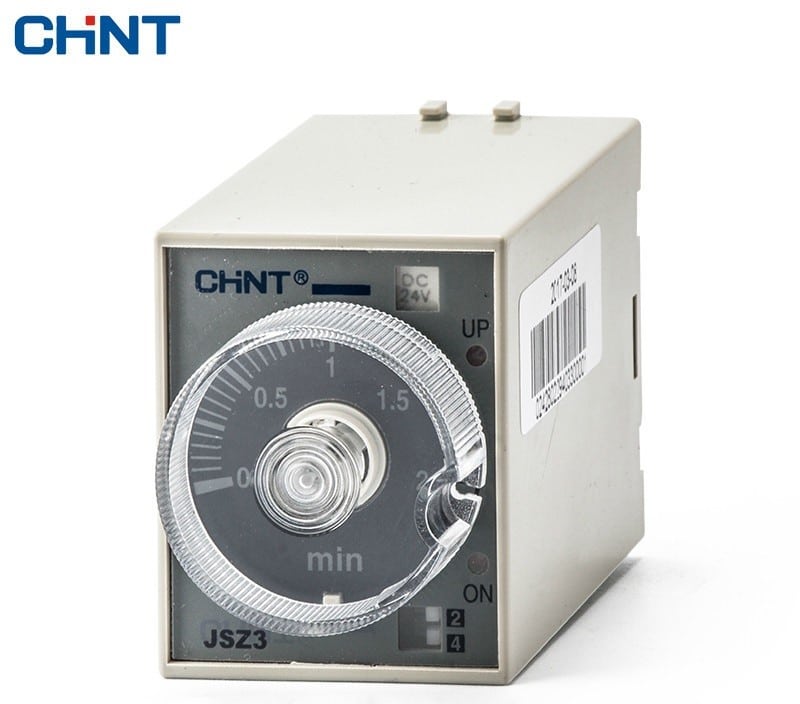
Application of Time Delay Relay
Time delay relays are very flexible and can be used for almost any purpose you need. Some typical applications of the time delay relay include:
Controlling power outlets
You can control a power outlet by using two relays to turn the flow of electricity on and off. One relay controls “On” when you are plugging something into the outlet, while another turns it off after whatever is plugged in finishes charging or powering whatever device is plugged in.
Activating lights
One very common use for a relay with a timer is turning lights on and off. The process works by turning the relay’s coil on for a certain amount of time to activate it before stopping power flow so that lights can turn off again after they have been activated. This is perfect if you want your lights to go out automatically when no one is in the room!
Controlling other types of machines
Many types of machines are controlled by electricity so that the time delay relay can be used for this purpose. You could control a machine on your house like an air conditioning system, heater, or home theater system without walking across their living room. There are endless possibilities for what kind of automation you can do with the time delay relay.
High-Performance applications
These devices are often found in high-performance applications such as robotics or machinery that require precision timing operations. Some examples include using them to activate valves in pneumatic cylinders, controlling timers on coffee makers, lighting systems at airports & train stations, and even powering up security cameras.

How to Test a Time Delay Relay?
If you’re trying to test a time delay relay, there’s an easy way to do it. First of all, make sure the device is turned off and unplugged from its power source. Then get an electric probe or any electrical testing tool that has two metal ends (one small & one large) so that both can touch at once inside of your circuit board. You’ll want to connect these probes where each end should go into either side of the “on” coil on the time delay relay (the larger probe should be connected in between).
When doing this correctly, you will see a back EMF when electricity flows through wires and other conducting materials like metals. This shows up as a temporary reverse flow of electricity when you move your probe from one coil to the other. If it does not show up, then this means that your time delay relay is either defective or has a broken wire in its circuit board somewhere.
You can also use a multimeter to check for continuity between each side of the “on” coil and ground (which should be represented by two probes touching at once). You will hear an audible sound if there’s no breakage within the device itself when doing so. You can test each connection on both sides until you find where it breaks to determine what needs fixing! This method works just as well with regular relays, too – even though they don’t have coils like these do, their internal switches still have to be connected properly for the device to work.
When working with time delay relays, it’s essential to test them correctly to work correctly. You can do this by using an electric probe and multimeter to test the device’s internal connections. This helps you find a break in your circuit board, which would be necessary for fixing if it were broken or defective.
Conclusion
Time relays are handy devices that can be used for a wide range of applications. They allow you to control all kinds of electricity-powered machinery with precise timing and delayed activation or deactivation. They are also used in high-performance applications such as robotics or machinery that require precise timing operations.
If you’re looking for an easy way to automate your home or business operations, then give the time delay relay a try. There is no need to install complicated systems that require more than just some simple wiring and connections by using time delay relays. It’s easy to install and can be used for almost anything that you need.
If you’re looking to find a time delay relay, then check out some of the ones we have for sale at CHINT.