

Table of Contents |
|
One of the hottest global trends in city management and environmental sustainability is the introduction of smart street light systems, which can save cities money while providing a higher level of service. Let’s look at some common questions that city managers and civil engineers might have about these systems.
What is a Smart Streetlight System?
A smart street light system operates similarly to smart devices around the home but on a larger scale. Traditionally, streetlights are lit on a fixed schedule or all day in some cities. They benefit drivers, pedestrians, cyclists, and other groups by increasing visibility along roads and sidewalks.
Smart streetlights, on the other hand, may also operate on a fixed schedule but are capable of far more than they were under the old system. Lights can be dimmed or brightened at certain times of the day, either manually or through automation/AI, depending on the location’s needs.
In addition to times of day and the presence of people, lighting levels can also be changed due to weather conditions. If it’s raining, snowing, or the road is potentially icy, brighter lights will increase visibility and reduce the potential for accidents.

How Do Smart Streetlights Work?
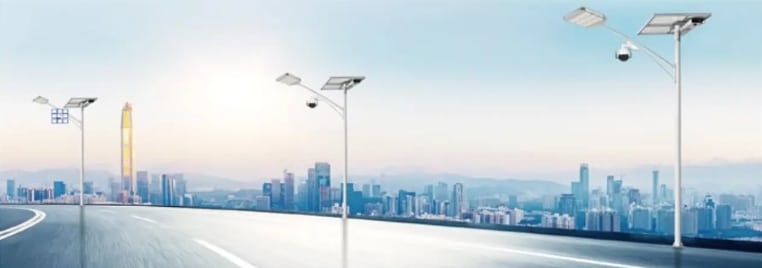
Smart streetlight systems employ a network of cameras, motion sensors, and other similar equipment that can detect the presence of people, vehicles, animals, and weather conditions, among other things.
This information is then relayed to the system’s command center, where the exact lighting level (according to the predetermined schedule) is indicated. A street near a residential neighborhood that has been unoccupied for 15 minutes will have its lights set to either the lowest level or completely off, depending on other factors.
The individual streetlamps are connected through a series of signals, discussed below, that allow them to communicate with one another as well as with the command center. They can be operated manually or through automation and even AI.
What are the Advantages of a Smart Lighting System?
The system provides numerous benefits for both the city and its citizens. The local Department of Transportation can save money by not lighting unoccupied streets for long periods. It is also significantly more energy-efficient and eco-friendly compared to the old system of lighting up empty streets for hours at a time.
It is also beneficial to citizens, who can enjoy a higher level of public safety, as improved lighting conditions can increase visibility, which can help reduce crime rates and prevent accidents.
How Does Smart Lighting Save Energy?
Smart lighting saves energy through adaptive light levels. If a street is empty, a lower setting of light or perhaps no light at all might be needed. This causes less light pollution, uses less energy, and also requires less maintenance.
They also employ LED lights, which require less energy than traditional halogen, incandescent, or fluorescent bulbs. These offer as bright or even brighter lights than their predecessors for a fraction of the wattage. By not lighting up empty streets and lighting more efficiently, significant energy levels can be saved.
What Sensors Can be Connected to a Smart Streetlight?
The three main types of sensors used are motion, light, and environmental. Each of these provides a different function. Motion sensors will determine if a person or vehicle is in the area or nearby, which would necessitate a brighter light until they have passed.
Light sensors are generally set off by the headlights but, if the device is powerful enough and the person is close by, a cell phone light also could trigger it.
Environmental sensors can detect rain, snow, and other potentially inclement weather conditions that would require increased visibility.
What Communications Technologies Do Smart Streetlights Use?
These systems use several different signals to communicate. Radio Frequency signals facilitate communication between lampposts, meaning that if motion is detected by one post, the ones surrounding it will light up as well.
Cellular is used to wirelessly communicate between the posts and the central control service.
Mesh networks are used to provide connectivity to the entire area and can send cellular signals to the network.
You may be interested in this blogpost
How Solar Street Lights Benefit Our Life
How Do I Determine the Right Light Level for the Street?
As different situations will require different light levels, it’s important to determine beforehand what will be required. Factors like traffic density, the presence of sidewalks for pedestrians, and local regulations should be taken into account.
An empty street near a mostly residential area will require the lowest lighting level. These lights can often be completely turned off until it is occupied. Conversely, a heavily trafficked street may need brighter lights. This provides a higher level of safety by making it easier to spot hazards.
Which Smart Streetlight Features Should I Consider?
There are many features to consider, some of which are highly situational. However, there some will be applicable in almost every case.
Dimming capabilities can take smart street lights to the next level. Instead of strictly turning the lights on or off, they can be dimmed for certain situations.
Being able to control the system remotely can be important, depending on the size of the city. Smaller cities might be able to get by without it but larger cities may find it essential. The durability and longevity of the setup are also important considerations.
Conclusion
Cities that are interested in saving money, protecting the environment, and providing higher levels of public safety should consider investing in a Smart Streetlight System. It is highly recommended that city managers and engineers consult Chint Global, the gold standard for these systems, for more information on how to transform their city’s lighting.