Please enter keywords to search

Global |EN

Choose your country & Language

Asia Pacific

Australia & New Zealand
India
Indonesia
Malaysia
Philippines
Singapore

Middle East & Africa

Kenya
Saudi Arabia
South Africa
United Arab Emirates

Europe

France
Kazakhstan
Netherlands
Spain
Italy
Turkey
United Kingdom

Latin America

Brazil
Colombia
Ecuador
Peru

North America

Canada
Mexico
United States
Low-voltage
Instruments and Meters
EV Charging
Telecom & Data Center
Buildings
Products
Solutions
Project References
Corporate Reports
CHINT Global
CHINT's Insights
Careers
Locate Us
Contact Us
Call Us +61 1800 270 870
Email Us info.australia@CHINT.com
Privacy Policy
Online Services

Choose your country & Language

Australia & New Zealand
India
Indonesia
Malaysia
Philippines
Singapore
Kenya
Saudi Arabia
South Africa
United Arab Emirates
France
Kazakhstan
Netherlands
Spain
Italy
Turkey
United Kingdom
Brazil
Colombia
Ecuador
Peru
Canada
Mexico
United States

Please enter keywords to search

Your search term contains restricted words. Please use different keywords.

Former Minister of MIIT: Industrial Duty in Carbon Goal

JUL 27, 2021

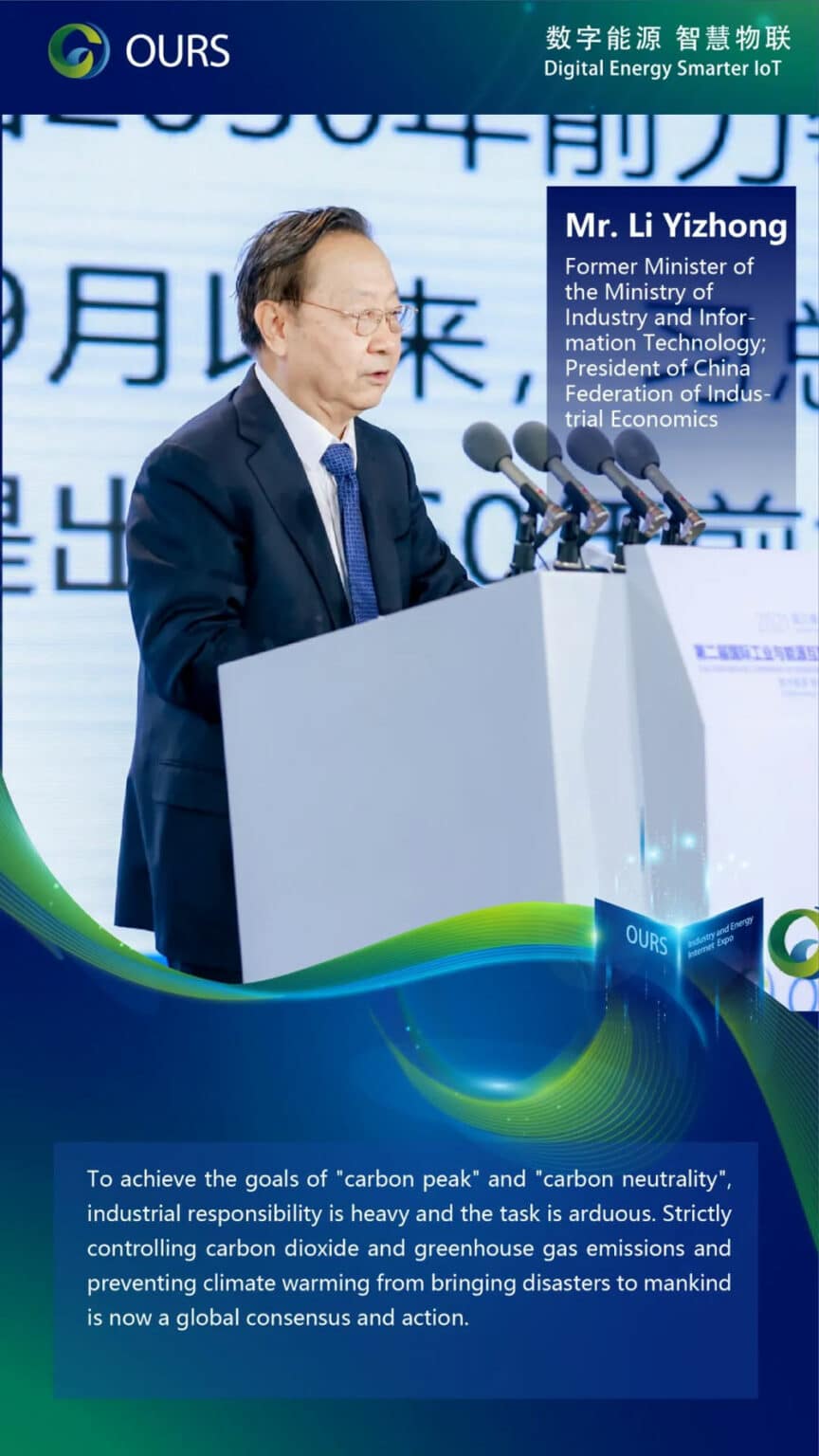
Li Yizhong, former minister of the Ministry of Industry and Information Technology (MIIT), stated at the OU. River Summit — 2nd International Conference on Industrial and Energy Internet Innovation held on July 10 that to achieve the goals of “carbon peak” and “carbon neutrality”, industrial responsibility is heavy and the task is arduous. Strictly controlling carbon dioxide and greenhouse gas emissions and preventing climate warming from bringing disasters to mankind is now a global consensus and action.

Li Yizhong cited the comparison of carbon dioxide emissions and growth rates between China and Europe and the United States in 2019. China’s carbon dioxide emissions reached 10 billion tons, accounting for 30% of the world, with an annual growth rate of about 1.5%. The United States, Japan, the European Union and other developed countries and regions have already achieved negative growth, reaching the peak of carbon. And some developing countries, including Russia, are experiencing positive growth.

Li Yizhong said that to achieve the goals of “carbon peak” and “carbon neutrality”, efforts must be made to adjust and optimize the energy structure, industrial structure and product structure. In China’s energy structure, from 2012 to 2020, the proportion of coal will fall from 68.5% to 56.8%, an average annual drop of more than 1% point, while the proportion of non-fossil energy will rise from 0.7% to 15.6%.
“From the perspective of China’s national conditions, this is an arduous task that must be completed.” Li Yizhong put forward his own opinions on achieving the goals of “carbon peak” and “carbon neutrality”:

01. As a large developing country, our energy consumption will continue to increase within a period of time.

For example, last year’s total energy consumption was 4.98 billion tons, standard coal increased by 2.2%, and carbon dioxide emissions are still increasing, but we must reduce the increase as soon as possible. Let the growth rate approach 0, let the absolute quantity reach the peak, and then turn into a negative growth, the absolute quantity begins to gradually decrease.

02. While accelerating the development of non-fossil energy, we must still pay attention to the rational development and scientific application of fossil energy.

Carbon neutrality is not determined by fossil energy, and ultimately the market allocation of resources will play a decisive role. For a long time, fossil energy and non-fossil energy coexist, but the structure must be optimized and non-fossil energy must be increased.

03. Various energy sources must be complementary and matched.

China’s power generation and power consumption markets are far apart. The 4 municipalities and 7 provinces including Zhejiang Province are all external power access areas. For example, 57% of electricity in Beijing depends on external power, and 45% of electricity in Shanghai depends on external power.

It is necessary to accelerate the construction of sub-high voltage and ultra-high voltage, increase power transmission from west to east, and access a high proportion of non-fossil energy power generation, which brings new challenges to the power grid. Non-fossil energy power generation now accounts for 30.4% of the entire electricity, and by 2030 it will exceed half.

04. It is necessary to strengthen policy research and scientific and technological research, and strengthen carbon trading and carbon tax interest rates.

This is a market approach. The carbon trading market is being launched, but a lot of work needs to be done.
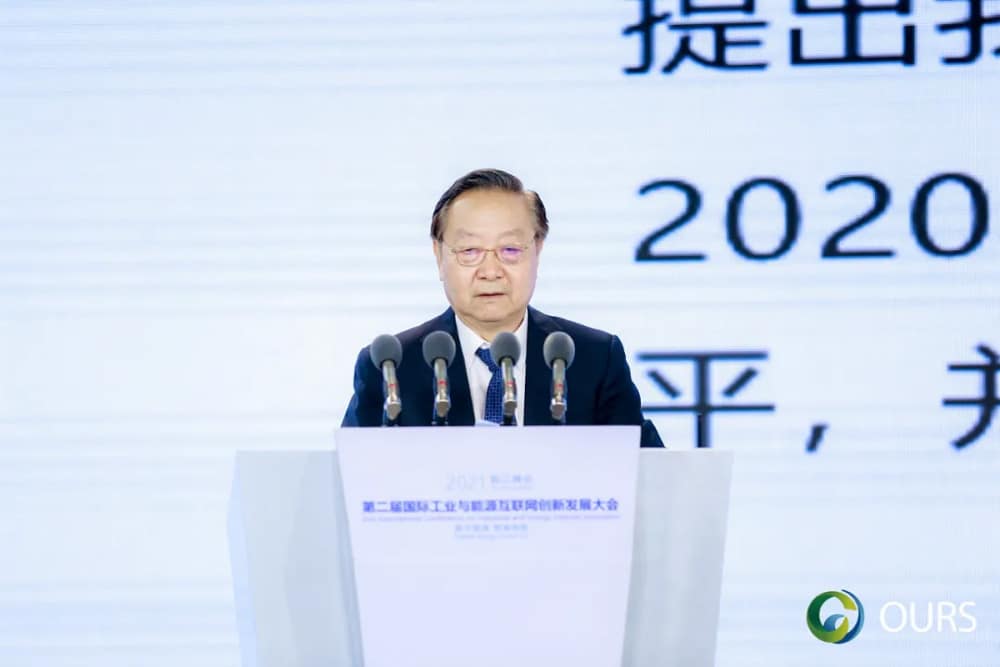
Li Yizhong said that “carbon peak” and “carbon neutrality” are a complex system that needs to strengthen departmental collaboration, which cannot be accomplished by one department.” So the relevant departments must assist, except for the efforts of the industrial sector, all industries must work together.

The Latest
JULY 22, 2026 CHINT Global Journey: Highlights from Around the World

For decades, CHINT has been steadfastly building its global footprint, evolving from early international expansion into a truly global enterprise with end-to-end industrial capabilities. Today, our business reaches over 140 countries and regions, supported by more than 30 manufacturing bases and 4 global R&D centers worldwide. With over 70% local talent across our overseas teams, we have built robust industrial resilience through global delivery and localized service, empowering comprehensive power system implementations with our full value-chain capabilities. Join us as we journey through some of CHINT's most remarkable moments across the globe.

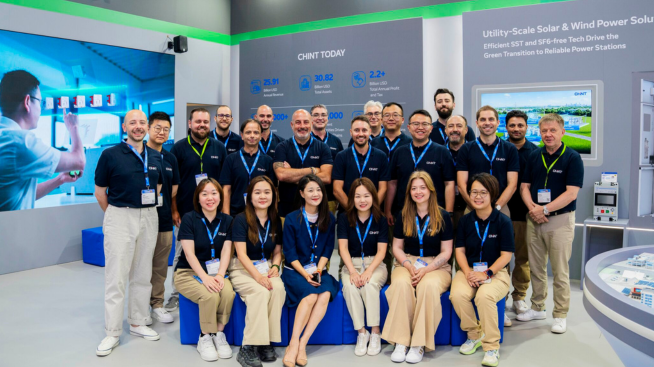
JULY 7, 2026 Meeting Europe's Evolving Grid Needs: CHINT Highlights Its Resilient and Future-Ready Solutions for the AI Era at Intersolar Europe 2026

Munich, Germany, June 23–25 – As Europe continues to accelerate its energy transition, the industry's focus is increasingly shifting beyond renewable generation capacity toward grid resilience, system flexibility, and infrastructure modernization.

JULY 3, 2026 Meeting Europe's Evolving Grid Needs: CHINT Highlights Its Resilient and Future-Ready Solutions for the AI Era at Intersolar Europe 2026

这是一个新闻组件模板,创建新的news请右上角create,或者复制此模板后move重新编辑配置

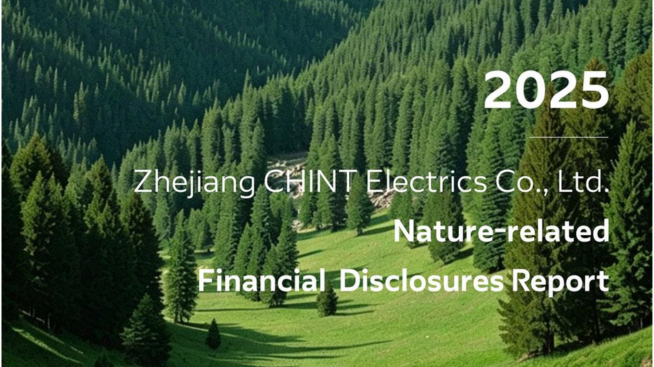
JULY 3, 2026 CHINT Electrics Releases Its First Climate-Related Financial Information Disclosure Report, Delivering on Its "Dual Carbon" Commitments Through Reliable Action

CHINT Electrics released its first TCFD-aligned climate-related financial disclosure report, highlighting climate governance, risk management, carbon targets, and its commitment to sustainable development.

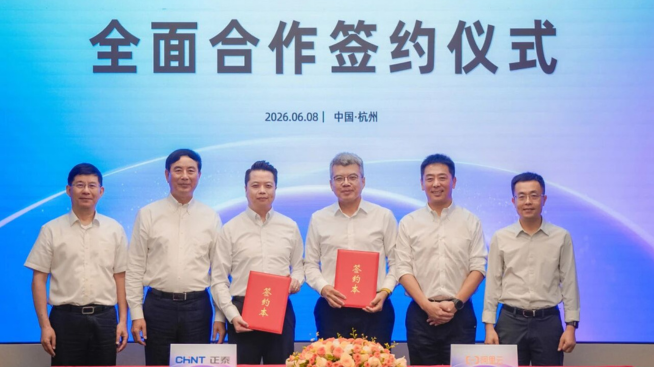
JULY 3, 2026 CHINT and Alibaba Cloud Forge Strategic Partnership: Driving Dual Empowerment in the AI Computing Era and Co-Expanding Global Markets

这是一个新闻组件模板,创建新的news请右上角create,或者复制此模板后move重新编辑配置

JULY 3, 2026 Invisible Assurance: The Reliable Backbone of a Training Centre

这是一个新闻组件模板,创建新的news请右上角create,或者复制此模板后move重新编辑配置

JUNE 4, 2026 Powering Innovation, Join the 3rd CHINT Cup Now

Apply for the 2026 CHINT Cup Youth Innovation Contest and compete in green development, smart electrical, and tech innovation tracks for global awards and incubation support.

JUNE 2, 2026 Powering Clean Energy in the Andes | CHINT Supports Renewable Project in Peru

CHINT supports ENGIE’s Intipampa Wind Power Station in Peru with a 75MVA 138kV power transformer, enabling reliable clean energy delivery in the Andes.

MAY 26, 2026 CHINT Electrics: 2025 Sustainability Report

Explore CHINT Electrics’ 2025 Sustainability Report, highlighting ESG strategy, carbon neutrality goals, green innovation, responsible governance, and global sustainable development progress.

MAY 25, 2026 CHINT Electrics Releases Its First Climate-Related Financial Information Disclosure Report, Delivering on Its "Dual Carbon" Commitments Through Reliable Action

CHINT Electrics released its first TCFD-aligned climate-related financial disclosure report, highlighting climate governance, risk management, carbon targets, and its commitment to sustainable development.