

Introduction
“How do you make confident decisions when every kilovolt carries real consequences for your crew and your equipment?” High-voltage systems live under constant electrical stress, so certification is less a checkbox and more a safety promise.
This article looks at how IEC standards shape performance, why certified HV breakers and CT/PTs respond predictably to faults, and how certification supports reliability.
Electrical Safety as the Core Reason Certification Exists
Certification exists for one simple reason: things must behave as expected when conditions turn harsh. In high-voltage environments, there is little margin for guesswork.
At its core, electrical safety is about predictability under stress, not just avoiding visible accidents. Certification supports that goal in practical ways:
- Structural integrity checks confirm that enclosures, contacts, and insulating components can withstand mechanical forces during switching and short-circuit events.
- Dielectric testing verifies insulation performance under elevated voltage levels, helping prevent flashovers when systems are pushed near their limits.
- Thermal performance assessments track how heat builds up during continuous operation, ensuring materials do not degrade quietly over time.
- Fault-condition simulations expose breakers, CTs, and PTs to abnormal currents and transient events, confirming they react in controlled, repeatable ways.
- Routine factory inspections and documented test results create traceability, so operators know exactly how equipment was validated.
Together, these steps reduce uncertainty across the network. Engineers can design protection schemes with confidence.
Procurement teams compare products on proven behavior, not assumptions. Maintenance crews face fewer surprises during commissioning or fault recovery.
In high-energy systems, where a single failure can damage assets or put people at risk, certification becomes a shared language of trust. It connects design intent, field operation, and long-term reliability into one predictable outcome.
That assurance matters most when systems are stressed, teams are exposed, and decisions must be made quickly without room for error.
IEC Standards Shape Safer High-Voltage Systems
Rules matter most when systems grow complex. In high-voltage networks, IEC standards bring order to that complexity, turning global experience into clear expectations that engineers can actually work with.
Creating Clear Performance Boundaries
IEC standards define what “safe” and “reliable” really mean in measurable terms. They set consistent requirements for insulation coordination, allowable temperature rise, short-circuit withstand strength, and mechanical endurance.
Instead of vague claims, equipment is tested against shared limits. That clarity helps prevent weak links in systems designed to operate under heavy electrical and mechanical stress.
Testing That Reflects Real Conditions
A key strength of IEC frameworks is how closely testing mirrors real-world operation. Devices are pushed through thermal cycles, fault scenarios, and endurance testing that simulates years of switching.
This approach aligns global expectations, so equipment tested in one region performs the same way in another. It’s not about theory. It’s about behavior when things go wrong.
A Verified Baseline for Engineering Teams
For engineering and procurement teams, IEC standards act as a verified baseline. Selection becomes more straightforward, commissioning runs smoother, and future audits carry fewer surprises.
Documentation, test reports, and traceable results reduce ambiguity across project phases, supporting electrical safety without slowing progress.
A Common Language Across Stakeholders
IEC standards also function as a shared language. EPC contractors, utilities, and industrial operators can align quickly because assumptions are already defined. That alignment shortens approval cycles and reduces friction when projects cross borders or involve multiple partners.
Why IEC Certification Matters for HV Breakers
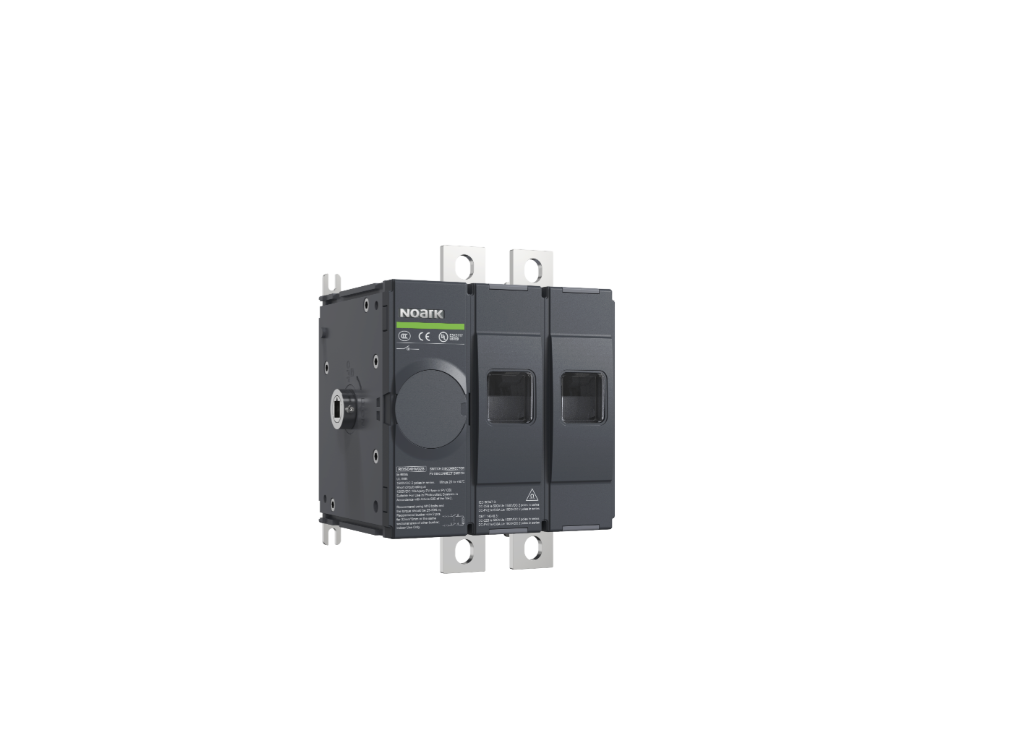
When faults occur, certified HV breakers respond in known, controlled ways. Short-circuit currents are interrupted within specified limits, mechanical systems endure repeated operations, and arc-quenching performance protects surrounding equipment.
This predictability directly affects uptime. Uncertified breakers risk delayed clearing, erratic behavior, or unsafe energy release, often leading to extended outages.
Manufacturers like CHINT, operating as a leading overseas intelligent electrical and clean energy system solutions provider, design HV breaker families to meet global IEC testing protocols.
That commitment supports localization while maintaining consistent performance worldwide, helping teams build dependable systems wherever power flows.
CT/PT Certification Improves Grid Protection Accuracy
Measurements decide outcomes long before breakers move. In high-voltage networks, certified CTs and PTs ensure those measurements can be trusted when protection systems need them most.
Defined Accuracy Classes Under IEC Standards
Certified current and potential transformers are tested to meet IEC accuracy class requirements across their rated operating range. This ensures voltage and current values delivered to meters and relays remain within known tolerances, even as loads fluctuate or networks expand.
Controlled Saturation Behavior During Faults
IEC certification verifies saturation limits, especially for protection-class CTs. During short-circuit events, certified CTs continue delivering usable signals instead of collapsing under high currents. This directly supports reliable relay decisions and faster fault clearance.
Reliable Ratio and Phase Performance
Ratio accuracy and phase displacement are critical for directional protection and differential schemes. Certified CT/PTs maintain these characteristics under thermal and electrical stress, improving coordination between protection relays across substations and feeders.
Improved Fault Detection Sensitivity
When measurements are accurate, relays detect abnormal conditions sooner. This sensitivity reduces fault energy, limits equipment damage, and improves overall system stability in industrial and utility networks.
Reduced Risk of Mis-Operation
Mis-rated or non-certified CT/PTs can distort signals, leading to nuisance trips, delayed protection, or failure to operate.
Certification mitigates these risks by aligning device behavior with protection design assumptions, reinforcing the principle behind how CT/PT certification improves grid protection accuracy.
CHINT’s CT and PT product families are developed and tested according to international IEC standards, providing consistent measurement performance across global installations.
That consistency helps engineers design protection schemes with confidence, operators maintain stable systems, and networks respond predictably when conditions change.
Electrical Safety Compliance for High-Voltage Equipment Across the Asset Lifecycle
High-voltage equipment doesn’t live in a single moment. It gets commissioned, inspected, questioned, audited, and leaned on for years. Certification plays a quiet but steady role through all of that.
From day one, certified equipment makes commissioning less tense. Test values are known. Acceptance criteria are already defined. Site teams spend more time connecting systems and less time arguing over whether something “looks right.”
As assets age, certification keeps paying off. Inspection cycles become easier to plan because behavior is predictable. Maintenance teams know which limits matter and which don’t. That consistency helps avoid both over-maintenance and missed risks, two problems that usually show up when documentation is thin.
Audits are where certification really shows its value. Clear test reports, traceable records, and standardized formats speed up compliance reviews. Third-party inspectors can verify performance without reopening old questions. Reporting moves faster, with fewer follow-ups.
Standardization also reduces friction between contractors, OEMs, and operations teams. When equipment is certified to the same international benchmarks, responsibility lines stay clear. Disputes shrink. Decisions stick.
CHINT supports this lifecycle approach through its global manufacturing footprint and Integrity and Compliance Programme. With a dedicated ICP Task Force and an independent Compliance Department, certification isn’t treated as a one-time label.
It’s part of a broader governance structure that supports traceability, ethical practices, and consistent electrical safety from factory floor to long-term operation.
High-Voltage Certification and the Confidence It Brings Operators
Anyone who has stood in front of a live panel knows the feeling. You trust the system, or you don’t. Certification is often what tips that balance.
Clear Performance Benchmarks
Certified high-voltage equipment comes with defined performance boundaries. Operators know how a breaker should behave during switching, or what a transformer signal should look like under load. There’s comfort in numbers that mean something, not estimates scribbled in a manual.
Staying Within Design Tolerances
Real systems drift. Loads change. Temperatures rise. Certification confirms equipment stays within design tolerances even when conditions aren’t ideal. That consistency matters for electrical safety, especially in networks where small deviations can snowball into bigger issues.
Fewer Surprises During Abnormal Events
Faults and transient events are where uncertainty causes damage. Certified equipment is tested for those moments, not just steady operation. That reduces the likelihood of unpredictable failure modes when switching operations or fault currents hit hard and fast.
Traceability That Builds Trust
Documentation matters more than people admit. Certification provides traceable test records and clear compliance history. When questions come up, answers already exist, and they’re backed by evidence.
This is why certification works as built-in risk mitigation. It doesn’t remove every risk, but it narrows the unknowns. With CHINT’s global R&D hubs, international subsidiaries, and intelligent manufacturing spread across regions, certified quality stays consistent.
Local knowledge feeds global standards, and operators benefit from equipment that behaves the same, wherever it’s installed.
Conclusion
Certification keeps high-voltage systems grounded in reality. It protects electrical safety, delivers predictable operation, and supports reliability over years of stress. Certified HV breakers and CT/PTs lower engineering risk and protect continuity.
Globally, CHINT aligns with IEC standards, supporting industrial and utility networks worldwide, where performance and trust matter most.