

Table of Contents |
A metal oxide arrester (MOA) is a highly beneficial electrical device. It’s used for overvoltage protection of power systems. It consists of metal oxide varistors (MOV). The varistors are connected in series or in parallel as its core component and are enclosed in a sealed insulator housing.
MOA: Working Principle
A metal oxide arrester functions due to the unique electrical properties of zinc oxide varistors under different voltage conditions. During regular operational voltages, the zinc oxide arrester components exhibit high electrical resistance. They allow only minimal microampere-level leakage currents. This permits the arrester to operate continuously without issues.
However, when overvoltage transients occur due to events like lightning, the behavior of the zinc oxide changes drastically. Under the influence of large overvoltage surges, the resistance drops substantially. As a result, the leakage current increases sharply to tens of amperes or even tens of kiloamperes. At these higher current levels, the metal oxide arrester can release the excess energy from the transient surge. This process limits the overvoltage to safe thresholds by clamping the peak voltage. Effectively, the MOA diverts and dissipates the dangerous overvoltage surges to the ground before equipment damage can happen.
The Categories of Metal Oxide Arrester
A metal oxide arrester can have different variants. Types of MOA can be differentiated according to their design, construction, and intended use environment. The primary categories include:
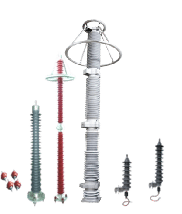
10-500kV Surge Arrester with Porcelain Insulator
Featuring durable porcelain insulation, these surge arresters are well-suited for medium and high voltage systems between 10-500kV. They demonstrate high mechanical strength and resist weathering. They are usually employed at outdoor substations and along transmission lines.
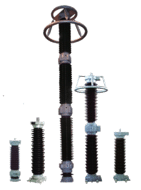
10-500kV Surge Arrester with Composite Insulator
With composite silicone rubber material as insulator, these metal oxide arresters provide insulation in a compact size. They have high pollution resistance, high explosion-proof performance, and high aging resistance.
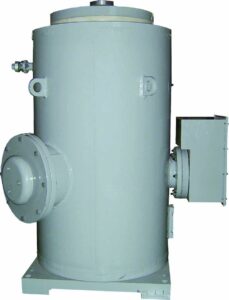
110-220kV GIS Surge Arrester with Metal Insulator
Integrated within gas insulated switchgear (GIS), these feature a sealed stainless-steel enclosure. It adopts special pressure-equalizing shielding. The annual leakage rate is less than 1% and the moisture content is less than 150ppm.
Applications of Metal Oxide Arresters
Metal oxide arresters find widespread implementation in power grids and industries where overvoltage protection is crucial. Their key applications include:
Substations
Metal oxide surge arresters are crucial components in electrical substations. They protect the electrical equipment from transient overvoltages caused by lightning strikes and switching operations. This enhances the overall safety and performance of the electrical grid.
 Overview Working PrincipleTypes Applications-20240714-1.jpg "Metal Oxide Arrester (MOA) Overview Working PrincipleTypes Applications-20240714-1")
Power Transmission
MOAs are extensively used throughout transmission and distribution systems. Substations rely on them to shield sensitive voltage transformers, circuit breakers, and feeders. Distribution networks install them to protect line equipment and transformers.
 Overview Working PrincipleTypes Applications-20240714-2.jpg "Metal Oxide Arrester (MOA) Overview Working PrincipleTypes Applications-20240714-2")
Industrial Enterprises
Metal oxide arresters are vital for process industries dealing with hazardous materials. Industries like mining benefit from MOA care of electrical motors and variable drives controlling extraction machinery. Railway switchgear and oil/gas control systems also leverage their robust surge immunity.
 OverviewWorking PrincipleTypesApplications-2024-0714-4.webp "Metal Oxide Arrester (MOA) OverviewWorking PrincipleTypesApplications-2024-0714-4")
CHINT YH10W Metal Oxide Arrester
CHINT is a premier brand specializing in smart energy solutions. Over the years, we have grown into a reputed corporation focused on building regional smart energy ecosystems. We build these through our green energy, smart networks, and new storage systems. Our YH10W metal oxide lightning surge arrester is suitable for various systems. The following characteristics and advantages have made it a top choice in the industry:
Self-Made Zinc Oxide Resistors
Our proprietary additive manufacturing process produces reliable zinc oxide varistors. These feature optimal nonlinear volt-ampere characteristics that are responsive to steep waves and surges. Our rigorous testing has confirmed the resistors maintain excellent surge absorption performance for years through inherently aged-resistant formulation.
 Overview Working PrincipleTypes Applications-20240714-5.jpg "Metal Oxide Arrester (MOA) Overview Working PrincipleTypes Applications-20240714-5")
Heat Shrink Tubing
The heat shrink tubing provides superior sealing of the zinc oxide blocks. It seals out moisture and contaminants that could compromise reliability. Its sealing abilities also allow for efficient heat dissipation from surges to ensure safe, prolonged operation.
 Overview Working PrincipleTypes Applications-20240714-6.jpg "Metal Oxide Arrester (MOA) Overview Working PrincipleTypes Applications-20240714-6")
Overall Injection Molding Process
The advanced molding technology helps accomplish mechanical protection and rugged moisture-proofing of interior parts. This sealing protects against environmental factors to optimize long-term functioning under tough conditions.
 Overview Working PrincipleTypes Applications-20240714-7.jpg "Metal Oxide Arrester (MOA) Overview Working PrincipleTypes Applications-20240714-7")
Silicone Rubber Housing
Through special additives, the reinforced silicone housing shields the metal oxide arrester from degradation due to UV, staining, ozone, corrosion, and other stresses encountered in outdoor use. This extends stable operational lifetimes for years.
 Overview Working PrincipleTypes Applications-20240714-8.jpg "Metal Oxide Arrester (MOA) Overview Working PrincipleTypes Applications-20240714-8")
Explosion-Proof Design
The YH10W features a special explosion-proof design, which confirms its safe operation can be ensured in various industrial settings.
 Overview Working PrincipleTypes Applications-20240714-9.jpg "Metal Oxide Arrester (MOA) Overview Working PrincipleTypes Applications-20240714-9")
Small Size, Light Weight for Convenient Installation
The compact and lightweight design boasts convenient installation. The easy handling and 360° wire-connecting terminals facilitate easy maintenance.
 Overview Working PrincipleTypes Applications-20240714-10.jpg "Metal Oxide Arrester (MOA) Overview Working PrincipleTypes Applications-20240714-10")
Wrapping-up
Metal oxide arrester solutions effectively protect power systems from overvoltage transients. They achieve that using the nonlinear conduction properties of zinc oxide varistors. As a leading manufacturer, CHINT offers reliable and high-performing arrester solutions like the YH10W for utilities and industrial users worldwide. We encourage professionals to visit our website to discover our full product portfolio tailored to any application need. With our reliable solutions, you get protection you can trust.