

Table of Contents |
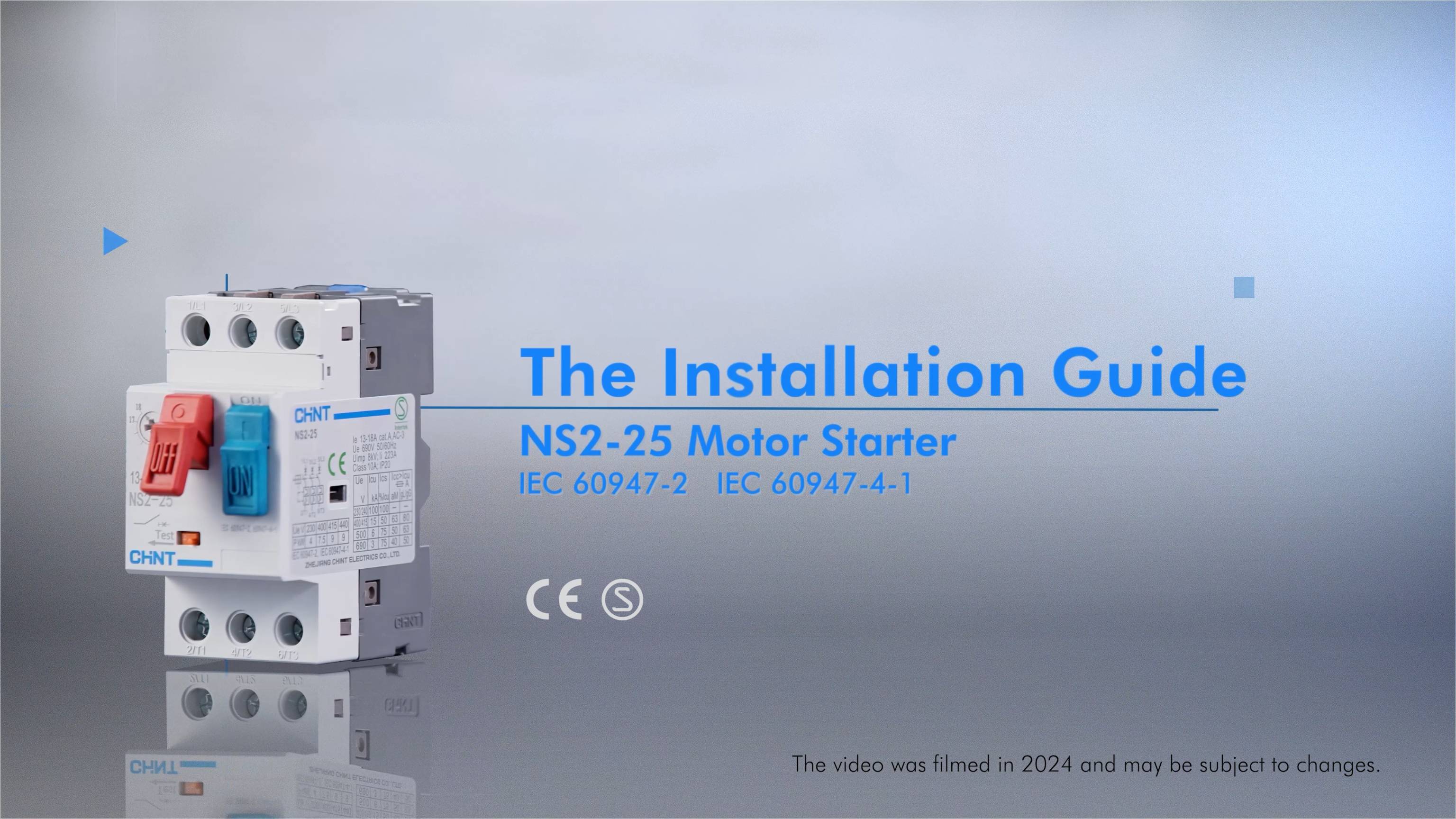
Motor starters are essential components in electrical systems. They protect motors from potential damage and control their operational sequences. The NS2-25 Motor Starter is a robust, compact device. It’s designed for reliable motor control and protection. However, installing it may seem overwhelming. This article provides step-by-step guidance to help ensure its successful installation.
Essential Preparation for Installing NS2-25 Motor Starter
Installing this AC motor starter requires careful planning. Completely disconnect the power supply from the electrical circuit before proceeding with installation.
Then, gather the right tools for a smooth installation process. Here are the essential tools you’ll need:
- Wire strippers
- Crimping tools
- Appropriately sized wires
- Wire lugs
- Screwdrivers
- Insulated gloves
- Multimeter
Installation Process of the NS2-25 AC Motor Starter
Following the correct procedure ensures this 3 phase motor starter functions effectively and safely.
1. Product Testing
Testing the product before installation helps verify its operational integrity. Use the ON and OFF buttons to check whether the starter can be connected and disconnected smoothly.
Then, use the TEST button by toggling the product in the arrow’s direction. Simultaneously press the ON button to confirm normal connection and disconnection processes.
Pay close attention to the starter’s response, noting any unusual sounds or resistance during the operation.
2. Alignment and Insertion
Precise alignment is crucial for proper installation. Position the bottom of the starter with the lower edge of the DIN rail. Then, push upward to the upper edge.
Double-check the alignment by gently pulling the starter to confirm it’s firmly locked in place.
For removal, use a flat-head screwdriver to lift the stopper. Lift the actuator’s top, separate it from the DIN rail, and tilt backward at an angle.
3. Wire Preparation
Select wires with cross-sectional areas matching the product’s current rating. Refer to these:
In(A) |
NS2-25 |
S(Cu) mm(2) |
1~6 |
Strip 10 mm of the copper wire using wire strippers. Ensure the exposed wire length is moderate and consistent. Inspect the stripped wire for any fraying or damage that might compromise the connection.
4. Crimping Connections
Use wire crimping pliers to attach wire lugs to copper wire ends. This creates reliable, secure electrical connections.
Perform a gentle tug test after crimping to verify the integrity of the connection.
5. Terminal Identification
The next step is to identify terminals. Refer to these:
- 1/L1, 3/L2, and 5/L3 as primary circuit incoming terminals.
- 2/T1, 4/T2, and 6/T3 serve as primary circuit outgoing terminals.
Use colored tape or markers to clearly label these terminals to prevent confusion during future maintenance (optional).
6. Wire Tightening
Employ an electric torque screwdriver to tighten wires to the specified torque value. Proper tightening ensures connection stability and safety. Refer to these:
Model Number |
NS2-25 |
Fastening Screw Size |
M4 |
Tightening Torque (N.m.) |
1.7 |
How to Test the NS2-25 Motor Starter
Testing the NS2-25 3 phase motor starter is a critical step to ensure its proper functionality and reliability. Follow these guidelines:
- After powering on the system, use the button next to TEST to toggle the product in the direction of the arrow. Verify its ability to disconnect normally.
- Conduct a continuity test using a multimeter. This helps confirm the starter is working as expected and provides a comprehensive assessment of its operational integrity.
In case of installation or operational issues, refer to the troubleshooting guide. The following are some common problem scenarios and troubleshooting methods:
Problem 1: Starter Doesn’t Work
- Potential Cause: Incorrect wire cross-section or improper connection.
- Troubleshooting Method: Carefully review wire specifications, ensuring they match the AC motor starter’s current rating. Re-check all connections and verify they meet manufacturer guidelines.
Problem 2: No Power Supply
- Potential Cause: Insufficient wire end stripping or loose connections.
- Troubleshooting Method: Re-strip wire ends, ensuring clean and appropriate exposure. Verify all terminal connections are tight and secure. Check the incoming power supply with a multimeter.
Problem 3: Premature Starter Malfunction
- Potential Cause: Mismatched current settings between starter and motor.
- Troubleshooting Method: Fine-tune the starter’s current setting to precisely match the actual motor’s operating current. Consult the motor’s specifications and adjust accordingly.
Conclusion
Installing an NS2-25 3 phase motor starter requires careful preparation. Precise execution and thorough testing are crucial. By following the above guidelines, you can ensure a safe and efficient installation. At CHINT, we provide reliable technological solutions. Our expert technical support can assist you with any installation challenges. Browse our website to explore our electrical solutions.