

Table of Contents |
Since the 1960s, dry-type transformers were the most common form of electric transformer produced. Their ease of use, effectiveness and inexpensive production costs account for their appeal.
As with any other electrical appliance, a dry-type transformer is built from a variety of parts to ensure effective operation. Although there are many different types of transformers, these dry-type transformers have become the most widely used because of their many advantages, including increased security.
If installed properly, these devices are incredibly dependable and can survive for decades with no maintenance. This guide on cast resin dry type transformers will go into great detail and cover dry type transformer upkeep and maintenance.
What is a Cast Resin Dry Type Transformer?
Electrical transformers known as cast resin dry type transformers use air as the insulator between their windings and core.
In a tank filled with air rather than a liquid, the windings and core of a dry transformer are sealed. Cast resin dry transformers aren’t as vulnerable to damage from electrocution, vibrations, or changes in temperature as oil-filled transformers. Additionally, they don’t need a lot of maintenance.
Dry transformers are frequently used in residential installations, where the wiring they serve may be out or exposed to harm despite the transformer itself being indoors. A dry transformer could be preferable to an oil-filled transformer if you reside in a region where flooding or lightning strikes are possible.
How Does a Cast Resin Dry Type Transformer Work?
The dry-type transformer insulates its windings and core without the need for fluids. Instead, a sealed cast epoxy resin that contains the windings and core is used.
In places with significant levels of moisture, cast resin dry-type transformers are used. It’s a result of the epoxy glue that surrounds its principal and secondary windings (non-hygroscopic). The winding can’t get wet because of the encapsulation.
Power ranges from 25 KVA up to 12,500 KVA, and the insulation class is F. (90oC Temp. Rise).
Low loss and low partial discharge. As a result, efficiency is excellent. It poses no risk of a fire hazard since non-flammable winding insulation is used. It can therefore be installed indoors.
Which Are The Types of Dry Type Transformers?
There are two main types of dry-type transformers;
Cast Resin
These transformers also referred to as CRTs, are enclosed in epoxy coating and are suitable for use in areas with a lot of moisture. This is done to stop moisture from getting within the windings, that would impair the functioning of the transformer.
These transformers are non-hygroscopic thanks to their cast resin encapsulation, which enables them to function dependably in humid environments.
Transformer Impregnated by Vacuum Pressure
High voltage is used when a vacuum pressure impregnated transformer functions, and its minimally flammable insulation is formed of foils and strips. The winding is formed of disks connected in series or parallel to accommodate larger voltages.
The insulation is moisture-resistant and impermeable to moisture since it is composed of class-H polyester resin.
What Are The Advantages of Cast Resin Dry Type transformers?
Self-extinguishing and Little Risk of Fire
These cast resin dry-type transformers have environmentally acceptable insulation. As a result, it winds comfortably, extinguishes on its own, is flame-resistant, and is of course simple to maintain.
You won’t need to spend money on a fire extinguisher if you have it. Plus, it doesn’t emit any harmful fumes, not even when arcing is present.
No Oil is Used.
The dry transformer doesn’t require any liquid to cool it, as was already mentioned. The only thing it needs to stay cool is air. Therefore, you won’t have to pay extra money for oil or other liquid, along with the associated maintenance fees. You may rest easy knowing that this transformer requires almost no maintenance.
Sustainable and Secure
You won’t have to worry about oil leaks because dry transformers don’t use oil or any other liquids. They also rarely explode since they self-extinguish. It comes with minimal electricity use, 90% reusable materials, and 20+ years of dependable service.
Low Installation and Load Cost
There are almost any restrictions for installing dry-type transformers because of their relatively safe nature, which results in reduced installation costs and minimal load losses. You won’t need to worry about additional environmental safeguards like groundwater protection.
Easily Maintained
We must stress this often. The dry-type transformers require very little upkeep. Like you hardly even need to keep up with them. You won’t ever have to bother with liquid testing. But a regular professional inspection is advised, and that shouldn’t be too challenging.
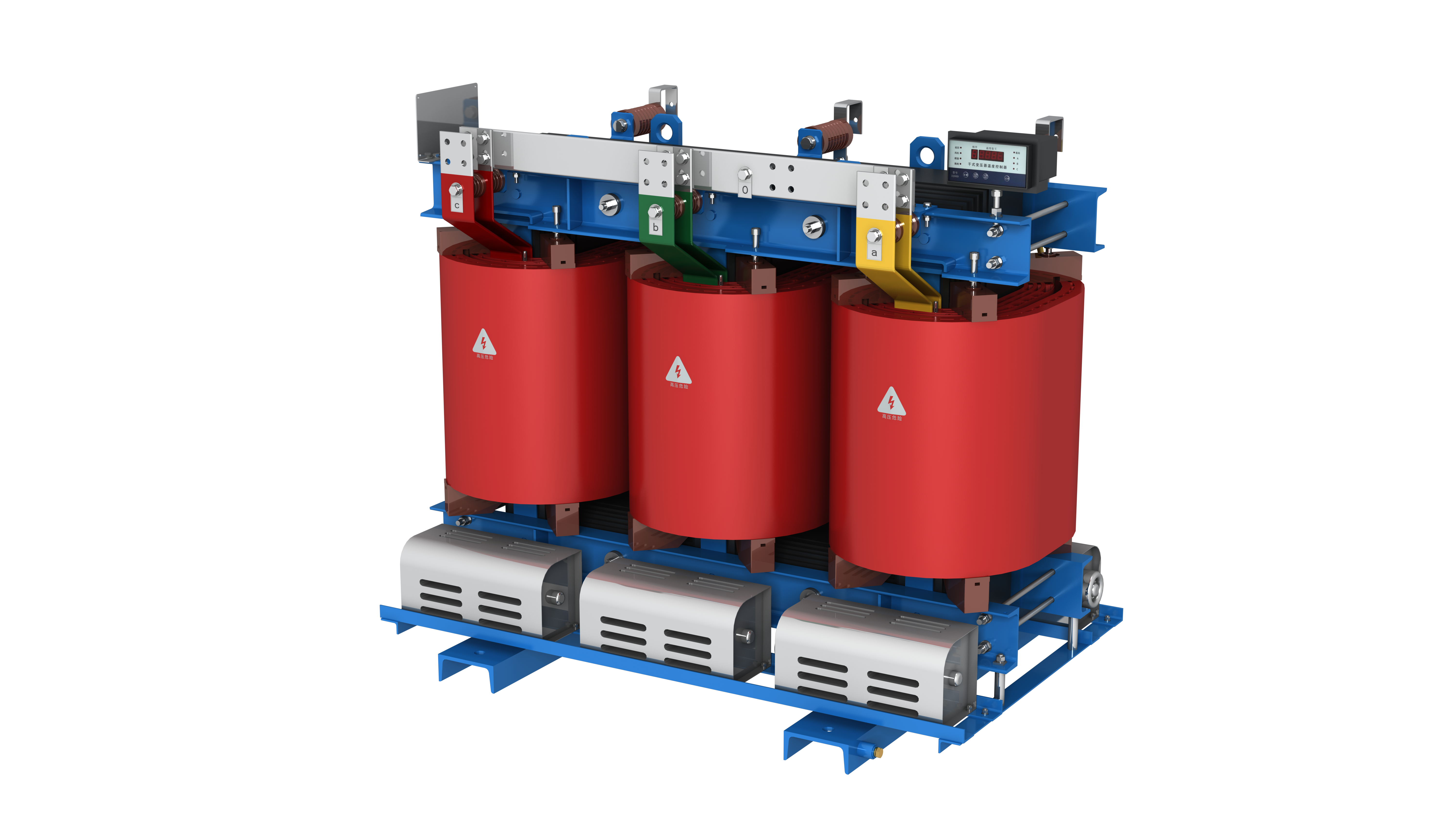
CHINT Dry Type Transformer
Dry Epoxy Resin Cast
This CRT has a voltage range of 10 kV to 35 kV and many amazing qualities, including low-temperature rise, less noise output, strong moisture resistance, and highly secure and dependability.
For huge industrial buildings that require effective power distribution, this is a fantastic option.
Alloy Amorphous Core Dry
It also has good moisture and thermal performance, strong resistance to electrocution, low noise emission, and is compact and small in size. It is rated at 10kV up to 35kV volume and 10kV HV standard voltage.
This transformer works well in commercial and high-traffic locations like shopping malls, train stations, airports, and even facilities that process natural resources like oil platforms. This makes it ideal for places that are very flammable and explosive.
Conclusion
In many of the sectors that simplify our daily lives, dry-type transformers play a key role. But when a piece of equipment has such a large capacity, several easy and fundamental procedures must be taken to ensure that it is well-maintained and unlikely to cause accidents.
Various parts are included with dry transformers to assure their operation. They are excellent for low to medium range operating voltage since they are air-cooled and simple to maintain.
It is advisable to start early and invest in the correct dry type transformer, such as those offered by CHINT, if you want to make the most of your investment. The amorphous alloy core dry type transformer, as well as epoxy resin cast dry type transformer, are excellent choices, to maximize your investment.